


By @DataRepublican on X
What the legacy Pentagon press corps refused to cover.
The Seditious Six video did not came out of nowhere in November 2025. It developed over a period of about eight years among academics, NGOs, and activists, with the final goal to rewrite the relationship between the military and the executive branch.
The story begins all the way back in January 30, 2017 — ten days into the first Trump presidency — Rosa Brooks published a piece in Foreign Policy laying out four ways to remove a sitting president before his term ended: impeachment, the 25th Amendment, resignation under pressure, and a military coup. Of the last, she imagined the moment senior officers would look at a lawful commander-in-chief and refuse:
“The fourth possibility is one that until recently I would have said was unthinkable in the United States of America: a military coup, or at least a refusal by military leaders to obey certain orders.”
Brooks had been Counselor to the Under Secretary of Defense for Policy, a political appointee inside the Pentagon from 2009 to 2011, reporting to Michèle Flournoy . Before the Pentagon, she was special counsel to the President at George Soros’s Open Society Institute . After it, she went to Georgetown Law, where she still holds a professorship and participates in the university’s national-security programming.

One year after that article ran, a new organization was quietly incorporated.
National Security Action – co-chaired by Obama deputy national security advisor Ben Rhodes and future Biden national security advisor Jake Sullivan — was funded largely, in Puck’s words, by Alex Soros since its inception. Rosa Brooks joined its advisory council.
Stage one: the personnel (2018)

Brooks would spend the next three years helping to operationalize her 2017 paper.
In late 2018, she joined the advisory council of National Security Action — the organization assembling the personnel that would eventually staff Biden’s national security positions. Prior to joining, she sat on the board of Open Society Foundations’ U.S. Programs, the grant-making entity upstream of the money that funded it. She was a senior fellow at New America — which itself takes $1 million-plus annually from Open Society — running its Future of War program, the intellectual shop studying exactly the civil-military questions her network would later litigate.
One person. Four seats. The board of the funder, the think tank writing the framework, the council assembling the staff, and … then, the project that would rehearse what that staff should do with power.
Stage two: the rehearsal (2020)

In late 2019, Brooks co-founded the Transition Integrity Project. In June 2020, TIP ran a set of war games modeling how a contested 2020 election might unfold — including scenarios turning on whether institutions, up to and including the military, would recognize the outcome. It operated under the umbrella of Protect Democracy, which had taken $650,000 from Open Society. John Podesta participated. So did roughly a hundred other senior figures. Only about ten of their names are public. The rest have never been disclosed.
In 2017, Rosa Brooks had asked whether institutions had options to oust a President. By 2020, she was rehearsing these scenarios with over a hundred people in Georgetown University.
Stage three: the legal machinery (2024)

By 2024, allegations that Georgetown University was undermining electoral choices had intensified. Mary McCord, former Acting Assistant Attorney General for National Security, runs the Institute for Constitutional Advocacy and Protection at Georgetown Law, the same national-security faculty home as Brooks. She had spent 2020 building ICAP’s model against unlawful armed force: fact sheets to all fifty states, coalitions of attorneys general and police chiefs, and — in her own words from a November 2020 Brookings panel — “I manned the voter intimidation helpline throughout the day.”
In January 2024, she told NBC News she was applying that same model to the military:
“We’re already starting to put together a team to think through the most damaging types of things that he might do so that we’re ready to bring lawsuits if we have to.”
The same year, Rep. Pete Sessions put the effort on the congressional record, alleging a coordinated campaign to “suppress Article Two provisions defining presidential control of the military.”
Stage four: the academic scaffolding (fall 2025)
In June 2025, the Democracy Defenders Fund — with, in its own words, “the assistance of Mary McCord of ICAP” — published President Trump’s Deployment of the National Guard Is Unlawful and Unprecedented, arguing that his move to federalize the National Guard under 10 U.S.C. § 12406, without invoking the Insurrection Act, was exactly that.
Brooks published in Daedalus, the journal of the American Academy of Arts and Sciences, arguing the traditional civil-military framework is inadequate against “authoritarian threats.”
McCord published “When Deference Is No Longer Due” in Just Security on October 14, 2025 — a direct argument against judicial deference to a president’s military determinations.
The five-month runway (summer-fall 2025)

In the summer and fall leading up to the Seditious Six video, interlocking organizations primed messaging that would result in the Seditious Six video:
Summer 2025 — About Face, a veterans organization, launches its “Right to Refuse” campaign.
Jul–Aug 2025 — National Security Action publishes a “Military and Intelligence” messaging one-pager, and the following month runs a battery of national-security message-testing focus groups.
Sep-Oct 2025 — Win Without War puts “Not What You Signed Up For” billboards at military bases, telling troops to question their orders.
Jun 17, refreshed Nov 11, 2025 — the National Lawyers Guild’s Military Law Task Force publishes, then updates one week before the video, its “Refusing Illegal Orders” FAQ for service members.
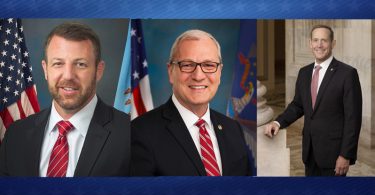
Nov 18, 2025 — six Democratic lawmakers release the video.
Reports said five of the six lawmakers had been recruited through New Politics Academy, a candidate pipeline. One of the six, Rep. Maggie Goodlander, is married to Jake Sullivan, the co-founder of National Security Action.
Soros: the family and money behind these eight years
George Soros’s personal wealth flows into the Fund for Policy Reform, a 501(c)(4) with roughly $841 million in assets; Alexander Soros sits on its board. The Fund sends hundreds of millions annually to the Open Society Policy Center / Action Fund, where Alex Soros also sits. That entity is the documented primary funder of National Security Action, a majority of everything the organization has ever raised.
Open Society appears at every node of the eight-year construction:
National Security Action — $4.9M+ from Open Society.
New America (Brooks’s think tank) — $1M+ annually.
Protect Democracy (TIP’s umbrella) — $650K.
Win Without War — $2M+, plus $1.5M+ to its parent, the [Center for International Policy](https://www.opensocietyfoundations.org/grants/past?filter_keyword=Center+for+International+Policy_.
And the man who ran the Soros advocacy checkbook, Tom Perriello, sat on National Security Action’s advisory council, the organization his own entity was funding.
The Pentagon press corps never looked

I searched “National Security Action” across 1,600-plus transcripts from Brookings, Carnegie, CSIS, the Council on Foreign Relations, Heritage, and dozens of other institutions, and the organization appears zero times. Its co-founders appear in more than seventy of those same transcripts, always under their government titles.
Its website currently lists no staff, no board, no advisory council, no annual report, no financial disclosures. When Puck’s Julia Ioffe asked the organization to confirm the most basic facts about itself, she hit a wall:
Nobody… not even the various comms people working for N.S.A., would tell me who is on the organization’s board or confirm that the group’s funding comes from Soros.
The organization that placed dozens of people in the Biden administration barely exists in the public record. And yet they, among other Soros-backed institutions, were at the center of an eight-year campaign to rewrite the relationship between troops and their commander-in-chief.
This institutional incuriosity is the legacy of the old Pentagon press corps.
A note on method: this piece was researched and drafted with AI assistance, working from a wide corpus of primary documents — IRS filings, archived organizational pages, scraped social media postings, and YouTube transcripts — that I assembled and directed. The thesis, the judgment, and the editing are mine.
First published on X. For references links, see post on X
An article I’ve been working on for a while.
The Seditious Six did not spring out of nowhere. They came from an institutional lineage that started soon after President Trump got elected. https://t.co/ThQ8CFmZpx
— DataRepublican (small r) (@DataRepublican) August 24, 2026



Leave a Comment