
By Jay Rogers
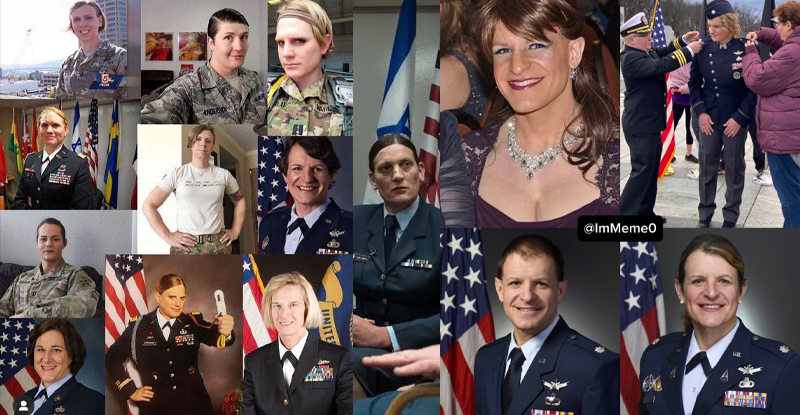
Last week, a divided D.C. Circuit panel issued a 2-1 ruling finding that the Pentagon’s policy disqualifying individuals with gender dysphoria from military service likely violates equal protection rights under the 14th Amendment.
The majority held that Secretary of Defense Pete Hegseth’s implementing guidance was driven by animus toward transgender people rather than legitimate readiness requirements — blocking the discharge of currently serving plaintiffs while leaving the enlistment ban intact. The dissent said courts have no business second-guessing a military fitness determination. The dissent was right.
I’ve spent more than 30 years in financial services and family office governance, including roles demanding clear-eyed risk assessment and fiduciary discipline.
My oldest son is a West Point graduate and is actively serving. My brother retired as a Green Beret. I raised sons with the same respect for military standards forged through real accountability.
Watching courts treat the armed forces like a corporate HR department doesn’t just frustrate me — it worries me.
The military exists to win wars. When judges override that mission, the cost doesn’t show up in a court filing — it shows up in a body bag.
President Trump signed Executive Order 14183 on January 27, 2025, titled “Prioritizing Military Excellence and Readiness.” It directs the force to maintain high standards of lethality, cohesion, uniformity, and integrity — standards that conflict with the medical realities of gender dysphoria. Hegseth followed with implementing guidance in February 2025 that presumptively disqualifies individuals with a current diagnosis, history, or symptoms of gender dysphoria.
New accessions are barred. Current service members face separation processing, though limited waivers remain possible. The rationale is practical: hormone treatments, surgical recovery, mental health comorbidities, and reduced deployability.
The D.C. Circuit majority treated the Pentagon’s concern about gender dysphoria as evidence of animus. That framing requires some historical perspective.
For nearly six decades — from its first appearance in the DSM-II in 1968 through successive editions under labels including “transsexualism” and “gender identity disorder” — the American Psychiatric Association classified this condition as a mental disorder.
The language changed in DSM-5 in 2013, when the APA renamed it “gender dysphoria” and shifted the diagnostic focus from the identity itself to the clinically significant distress the incongruence causes. The distress component was never removed. The World Health Organization didn’t move it out of the mental disorders chapter until ICD-11 took effect in 2022.
A military exclusion policy built on that same half-century of clinical consensus isn’t animus. It’s institutional memory.
These aren’t abstract concerns. The Pentagon confirmed that as of December 9, 2024, some 4,240 active-duty, Guard, and Reserve members had been formally diagnosed with gender dysphoria, out of approximately 2.1 million total troops. Total treatment costs for gender-affirming procedures between 2015 and 2024 ran to roughly $52 million, according to defense officials.
The military has always used categorical exclusions for conditions that impair fitness. DoD Instruction 6130.03 sets medical standards that disqualify everything from certain asthma histories to cardiac conditions. Fitness is assessed by category, not by individual lobbying effort, and that’s not cruelty — that’s how you field a deployable force.
Judge Reyes — a Biden appointee and the first openly LGBTQ federal district judge — issued a nationwide injunction in March 2025 blocking key parts of the policy. Hegseth responded on X with the kind of sarcasm that cuts straight to the point: since “Judge” Reyes had apparently become a top military planner, she could report to Fort Benning at 0600 to instruct Army Rangers on high-value target raids, then dispatch to Fort Bragg to train Green Berets on counterinsurgency.
The post landed because it named the central absurdity — a judge with no combat background dictating fitness standards to people whose lives depend on those standards being right.
Civilian courts hold some oversight authority over the military, but it’s sharply limited by design. They can’t serve as direct appeals courts for court-martial convictions or routine administrative separations. The Uniform Code of Military Justice handles its own appellate process through service courts of criminal appeals up to the Court of Appeals for the Armed Forces.
Article 76 of the UCMJ declares the findings properly reviewed final and binding on all federal departments, courts, and officers, with narrow exceptions.
The primary route for civilian intervention runs through habeas corpus petitions under 28 U.S.C. § 2241. Even there, the Supreme Court in Burns v. Wilson (1953) established a narrow scope: courts check jurisdiction and whether the military fully and fairly addressed substantial constitutional claims. They defer heavily because the military operates as a separate society with demands that civilian life doesn’t share.
Rostker v. Goldberg (1981) upheld male-only draft registration based on real combat differences.
Goldman v. Weinberger (1986) protected uniform regulations against religious exceptions to preserve cohesion.
Orloff v. Willoughby (1953) and Gilligan v. Morgan (1973) both warned judges against substituting their judgment for military professionals on readiness questions.
These weren’t close calls.
The Supreme Court already allowed enforcement of the ban in May 2025 while litigation continued in the lower courts — a significant procedural signal that the current Court is not inclined to hand activist district judges a permanent veto over Pentagon fitness policy. Hegseth’s promise to see the D.C. Circuit majority at SCOTUS is not bravado. It’s the correct move.
The equal protection argument sounds reasonable until you remember that the military isn’t a workplace. Courts have never treated it like one, and for good reason.
Biological sex differences affect physical performance standards. Privacy in shared barracks matters. Unit cohesion under fire is not a preference — it’s a survival variable.
Medical dependency that limits deployability is a categorical problem regardless of the underlying diagnosis.
The numbers are small relative to a 2.1 million-person force. The principle is not.
Allow identity-driven medical exceptions that constrain deployment flexibility, and you chip away at the singular focus that has kept this country secure.
My brother and the service members I’ve known for decades understand this without needing a law degree. You train. You deploy. You execute. Distractions cost lives.
Congress should codify military deference on fitness standards and draw clear limits on judicial second-guessing of Pentagon operational decisions. The administration must keep pressing toward the Supreme Court.
The public needs to insist that judges stay in their lane. Lethality over theater. Order over experimentation.
The men and women who wear the uniform deserve nothing less.
_
Jay Rogers is a financial professional with more than 30 years of experience in private equity, private credit, hedge funds, and wealth management. He has a BS in criminal justice from Northeastern University and has completed postgraduate studies at UCLA, UPenn, and Harvard. He writes about issues in finance, constitutional law, national security, human nature, and public policy.
First published on Real Clear Defense


Leave a Comment