
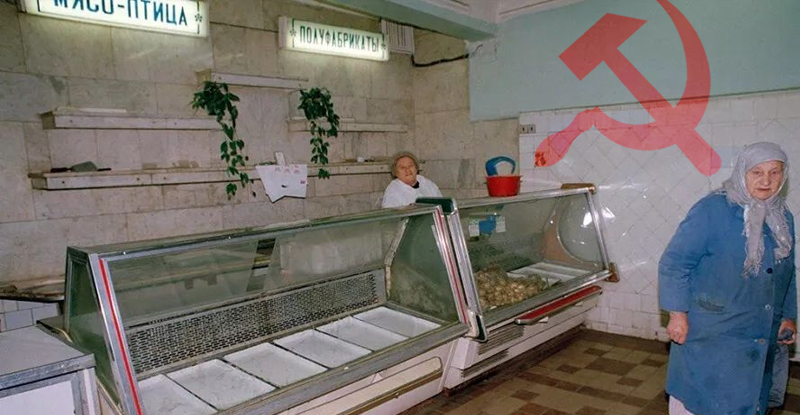
Kids don’t learn in school about the Cold War and how miserable it was for people in Communist countries to live under Marxist ideology. Bookmark this page to show your grandkids these examples (and then tell them that you fought against Marxism during the Cold War):
my grandmother was an educator, started a private school in Havana in the 50s and worked as the principal
taught some English classes at night for adults as well
so obviously Castro’s goons took possession of the school after 1959
which to have your dream that you built from… https://t.co/I27xSxnRHh
— Garga.eth (Greg Solano) (@CryptoGarga) January 6, 2026
my grandmother was an educator, started a private school in Havana in the 50s and worked as the principal
taught some English classes at night for adults as well
so obviously Castro’s goons took possession of the school after 1959
which to have your dream that you built from nothing taken from you and given to complete idiots who burn it down in short order is one thing
but the most humiliating aspect of the whole ordeal that my grandmother would talk about was more specific than that
it was having men show up at her door, after everything was done, holding an inventory sheet that they found which listed how many desks she had bought for the school, blackboards, etc
and being asked about a few desks they couldn’t find. literally that. how come there’s 48 desks in the school and not the 50 on the inventory sheet.
of course the answer was that they broke and they threw them out. the inventory sheet was old.
but they didn’t believe her, they intimidated her at gunpoint. a little lady, a school principal who probably weighed 100 pounds. where are the fucking desks. she remembered that forever.
it’s almost 70 years later, and the situation is if anything only more absurd, more morally and economically bankrupt
in Cuba if your fridge breaks, you wait until the government sends you a new one (on the seventh of never) and docks it from your govt pay accordingly. your govt pay is ~16 USD a month.
you can make more by pestering some euro or canadian tourist to buy some random junk off you — if you follow them around enough and are persuasive enough, they will give you a $20, which is more then your doctor makes in a month.
which is sort of whatever, because there really are no stores, just ration counters with 5-6 things listed on a blackboard that they’ll trade you for tickets.
rice, sugar, salt, cigarettes.
if you don’t smoke you trade you trade your cigarette rations for something else. toilet paper.
when your kids get older, they don’t move out, there’s literally nowhere for them to move to. nothing is built, nothing is for sale, and you have no money anyway. you put up paper walls, pretend not to hear each other.
the thing you smuggle into Cuba when you’re visiting family isn’t expensive stuff, the most precious items are USB drives with movie rips and video game roms, and $5 tins of Cafe Pilon
’cause Cuba exports any good coffee it makes, and leaves locals to drink stuff so bad that the $5 tin feels truly luxurious.
when I was visiting my great aunt, one of her neighbors came in and made himself a cup of coffee. he didn’t know it was fresh from the tin we brought over; it had been transferred over to their usual container.
saw a grown man well up with apologetic tears in his eyes because as soon as his lips touched the drink, he knew this was different. he drank his neighbor’s Cafe Pilon thinking it was just the usual crap and he almost cried. Because he felt he had taken something incredibly precious of his neighbor’s without asking.
anyway, my point is: you don’t really need to try out repossessing people’s private property in New York. there’s an island 90 miles off Florida where incredibly smart people, I sincerely mean that, have been doing it for three-quarters of a century.
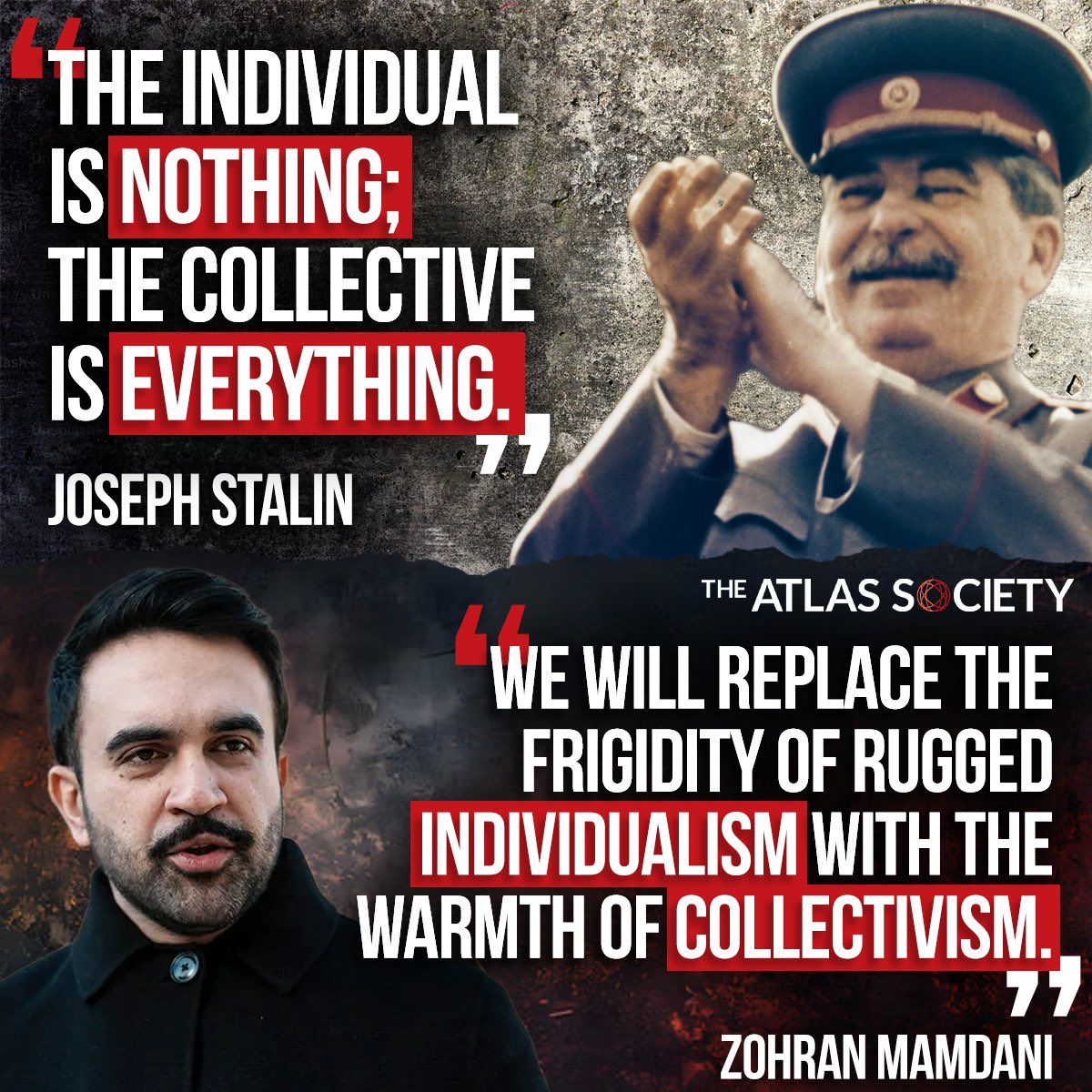
As someone who experienced the “warmth of collectivism” firsthand as a child, because Russian colonisers brought communism and collectivism to my very individualistic country, let’s dig into what that “warmth” actually looked like.
1. A flat or house to live in. You literally… pic.twitter.com/MPQzbnTH0T— Regina Bauer 🇪🇪🇪🇺🇺🇦🇫🇮🇸🇪🇮🇱🇬🇪 (@petite_michelle) January 7, 2026
As someone who experienced the “warmth of collectivism” firsthand as a child, because Russian colonisers brought communism and collectivism to my very individualistic country, let’s dig into what that “warmth” actually looked like.
1. A flat or house to live in. You literally couldn’t buy one. That simply wasn’t an option. You waited for years to get housing assigned by the state. And you can already imagine the quality: quickly built blocks, or the confiscated apartments of “enemies of the people” who were shot or sent to the Gulag. The party elite got the good places. Ordinary people got a cheap Khrushchyovka with a tiny kitchen and no lift after 5–10 years of waiting. No other option.
2. Your job “for life” (whether you wanted it or not). Officially, everyone had work. In practice, you didn’t choose a career so much as you were placed into one. Want to switch? Good luck. Want to start a business? Cute. Private enterprise was either illegal, punished, or pushed into shady “don’t ask, don’t tell” territory.
3. Travel? Not for you. You couldn’t just decide to go somewhere, even within the “friendly” socialist world, without permissions. The border wasn’t a line on a map, it was a wall in your head. Want to see the West? That wasn’t a holiday plan, that was a crime plot.
4. Information was “collective” too. One TV truth, one newspaper truth, one approved version of reality. If your eyes disagreed, your eyes were “wrong.” And if you repeated what you saw out loud, you could become a “problem.”
5. The “warmth” came with a price: fear. You learned early what not to say, to whom, and where. You learned that walls had ears, and sometimes so did classmates. Collectivism works best when everyone self-censors.
6. Queues: the national sport. Food, shoes, furniture, books, washing machines, a decent winter coat. You stood in line because “they might bring something.” Planning your life around rumours about deliveries isn’t community. It’s scarcity management.
7. Quality didn’t matter, because choice didn’t exist. When there’s only one type of sausage, it doesn’t have to be good. When there’s only one brand of anything, the producer doesn’t compete for you. You compete for the product.
8. Equality was a slogan, not a reality. Officially, everyone was equal. Unofficially, some were “more equal,” and their equality came with better housing, better shops, better doctors, and better futures.
9. Collective responsibility meant individual guilt. One person messes up, everyone gets punished. One person speaks out, everyone gets threatened. It trains people to police each other, not support each other.
And the punchline: they still called it “care.” Not because it was caring, but because calling it care made it harder to argue with.
Thank you for sharing your personal experiences under “Warmth of Collectivism”, similar to what I survived under Mao. Luckily, I came to America in 1988.
— Lily Tang Williams (@Lily4Liberty) January 8, 2026
I have so many stories from back then in Romania. My wife pushes me to write a book.
— Gavril Ducu 🇷🇴🇩🇪🇺🇲🇳🇱🇪🇺@🇺🇦 (@DucuGavril) January 7, 2026
I had to check the profile to see whether the author was writing about my country (Poland) or some other one — the Russians used the exact same system of enslavement everywhere 🙂
— Dziecko Rosemary (@DzieckoRosemary) January 7, 2026
I grew up in socialism and can confirm this completely. Also, buying a car or having a telephone was only possible after years of waiting. and if you had “connections”. We were able to buy wedding rings only because my aunt “knew” people. And all these “favors” had to be repaid..
— Ouroboros — Слава Україні! (@Galina1357421) January 7, 2026

It’s the same story everywhere.
Český Krumlov, CZ – 1986 vs 2023. pic.twitter.com/fg7NN6OEry— David Payne (@DavusPayne) January 7, 2026
I have the same childhood memories of Soviet occupied Czechoslovakia…which wasn’t even the worst in the Soviet block. I would never trade the daily grind and hustle of my rugged individualist existence as a proud adoptive American for the putrid tepid fumes of collectivism.
— Ria K (@RiaK51132494) January 7, 2026
I can attest to everything she wrote, as true. In some cases was even worse. Communism was applied differently in each country, based on their cultural values. Nevertheless, it was bad, but very good for the elites
— Natalia Nastovici (@MelMizil) January 7, 2026
Yes, we had the same “warmth” in Romania. My son, born in 2005, says he cannot imagine such a way of life. It seems so absurd now. Yeah, I’m afraid many people in the West need to suffer this hell firsthand, in order to believe it. More’s the pity…
— Smaranda Nistor (@SmarandaNistor) January 7, 2026
It’s very well written. I have goosebumps just reading it! It’s exactly the same as communist Vietnam in many ways. South Vietnam fought a 30-year war against the North Vietnamese communists. We lost the war. It’s so sad that the West sided with the communists.
— Thao Nguyen (@ThaoNgu99) January 8, 2026
My father was imprisoned for a year for the crime of slaughtering a chicken from our family farm to feed his starving children. Yes he felt the warmth of a collective concentration camp with a cup of rice a day. It was very warm indeed.
— Madisonian (@amorales866) January 7, 2026
In Poland, it was much the same. Perpetual crisis and scarcity management were the communists’ way of keeping people constantly focused on basic needs. Nothing else. A DELIBERATE DEPRESSION. The EU is now heading in precisely that direction. pic.twitter.com/V4VyIPdHAh
— Pan Mustafa (@NowakGucio66689) January 8, 2026

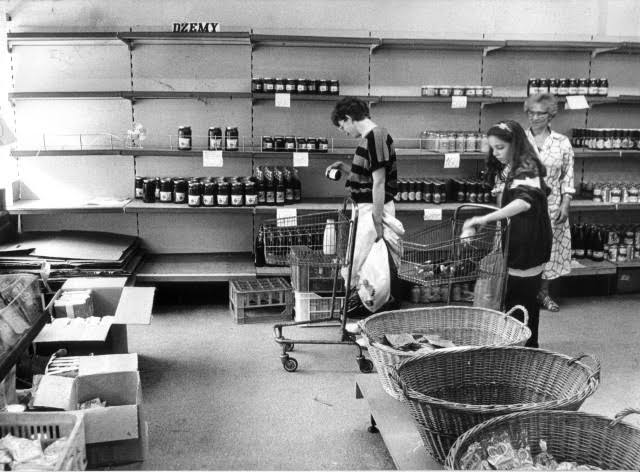
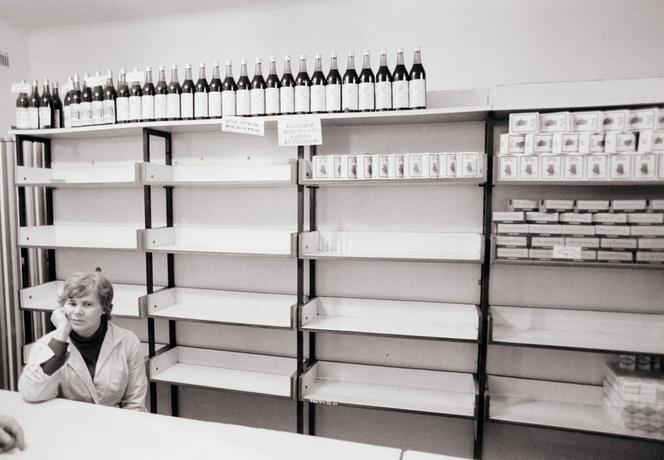
Partially removing the number 3, you are describing #Cuba now. Thank you!
— Angel Gabriel Valdés Sarduy (@ValdesSarduy86) January 8, 2026
This was the reality in Poland, too. We must say it again and again, especially now when ‘socialism’ is again popular on the left, without understanding what it leads to.
— Kasia Hein-Peters, M.D. (@Kasia_HP) January 8, 2026
Precisely written, it applied to Czechoslovakia also (just slightly better situation with housing) and then you come to this site and some mad American starts telling you, how great the communism is. I wish I could send them with time machine fback for one whole year to live it.
— Janča M🇨🇿 (@JM2639) January 7, 2026
You just described my life in the USSR. I refuse to go back to this “warmth.”
— Lina (@Reader_LK) January 7, 2026
My family and I spent three days and nights in queue just to get shoes.Not any particular shoe or shoe size,any shoe,so later we could trade them for the right size shoe with the rest of those waiting and were lucky to get in before they ran out This was Cuba and Socialism
— juan alfonso (@bicharrac0) January 8, 2026
This survivor of the Maduro regime should be required viewing for every American and it should be played on every news station in America before anyone forms an opinion about the Venezuela op. pic.twitter.com/8nzPVFmbYc
— Robby Starbuck (@robbystarbuck) January 8, 2026
What it’s REALLY like living in a Communist country under Marxist ideology







Leave a Comment