
By Jonathan K. Corrad, VMI 2005
As Virginia lawmakers debate proposed changes affecting the Virginia Military Institute—particularly in the wake of House Bills 1374 and 1377—it is worth stepping back from the immediate politics to ask a more fundamental question: what does the Commonwealth invest in when it invests in VMI, and what does the U.S. military receive in return?
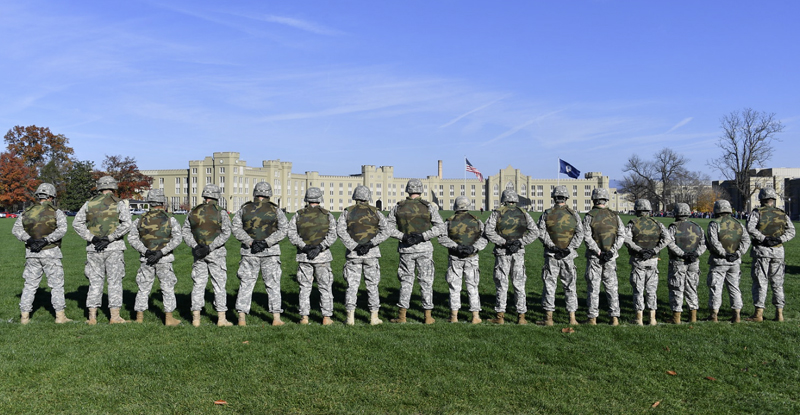
VMI is not simply another public university with a military program. It is a purpose-built leadership institution designed to produce citizen-soldiers through discipline, shared hardship, and accountability.
From its founding, the Institute has existed to form leaders of character capable of serving both in uniform and in civilian roles where judgment, responsibility, and ethical clarity matter.
That mission is not symbolic. It is operational.
With a Corps of roughly 1,600 cadets, VMI is small by public-university standards. Yet its leadership output—particularly for the U.S. military—is disproportionately large. VMI alumni have earned seven Medals of Honor and produced nearly 300 general and flag officers across the Army, Navy, Air Force, Marine Corps, and Space Force. On a per-capita basis, few institutions—civilian or military—approach that record.
Approximately half of each graduating class commissions into the U.S. armed forces, a rate far exceeding that of typical public universities. Unlike most institutions, every VMI cadet participates in ROTC, regardless of whether they ultimately commission.
As a result, the entire student body is exposed to leadership under authority, ethical decision-making, and civil-military responsibility. These are not elective experiences; they are embedded in daily life.
One reason VMI’s contribution to the force remains significant is that it belongs to a small and distinct group of institutions designated by Congress as Senior Military Colleges. These institutions differ fundamentally from conventional ROTC programs. They are immersive leadership environments designed to impose responsibility, discipline, and ethical accountability long before commissioning.
Public reporting has indicated that senior Department of War officials have acknowledged VMI’s longstanding role as a significant commissioning source.
In public statements and congressional discussions, Pentagon officials have stated that VMI’s unique military environment has, for generations, made it a significant source of commissioned officers for the Armed Forces, and have cautioned that destabilizing this pipeline carries implications beyond state higher-education policy.
That assessment reflects a broader defense-community recognition that VMI’s immersive leadership environment—where discipline, ethical responsibility, and command authority are cultivated long before commissioning—contributes directly to force readiness and effectiveness [1].
Recognition of VMI’s value also extends to senior defense leadership with direct operational experience. In a public address to the Corps of Cadets at VMI in September 2018, then-Secretary of Defense James N. Mattis, Gen., USMC (Ret.), spoke plainly about the Institute’s contribution to the armed forces.
Mattis observed that
“many, many times, I have had graduates of this school serve around me, above me, under me,” and added that “there is a debt that our country owes that goes back many, many decades… for a school that develops this sense of service before self” [2].
His remarks reflect a practitioner’s view of VMI’s value: not as a symbolic institution, but as a reliable source of leaders whose early formation translates into trusted service across the force.
That perspective aligns with a much longer national understanding. President Franklin D. Roosevelt, speaking at VMI’s centennial in 1939, characterized the Institute’s legacy as “a triumphant chronicle of the part which the citizen-soldier can play in a democracy” [3]. Roosevelt’s observation captures the enduring relevance of VMI’s model—one that links disciplined leadership formation with democratic service and national defense across generations.
At the core of this system is VMI’s single-sanction Honor Code: a cadet will not lie, cheat, steal, nor tolerate those who do. Violations are adjudicated by cadets themselves, with a single consequence—separation from the Institute. There are no negotiated penalties, tiered sanctions, or exemptions based on status or achievement.
This is not an anachronism. It is a deliberate leadership-formation tool. It teaches future officers and civilian leaders that integrity is not situational, that accountability is personal, and that trust is the foundation of command.
In an era when ethical ambiguity is often tolerated, VMI insists on moral clarity—and accepts the institutional cost of enforcing it.
House Bill 1377, as amended, establishes an advisory task force to study VMI’s mission, governance, academic programs, military training, and institutional culture, with a report due later this year. While its proponents described it as a mechanism for reviewing the public value of state institutions, it nonetheless raises concerns because it risks framing VMI’s mission and contributions as a problem to be justified rather than as outcomes to be evaluated and strengthened.
Public funding is not a reward for institutional perfection; it is an investment in public return. By measurable standards—officer production, senior-leader attainment, national academic recognition, and sustained service—VMI continues to deliver a return disproportionate to its size and cost.
Implementation of HB 1377 should therefore be conducted with care, ensuring that any review or reporting requirements emphasize continuous improvement rather than destabilizing an institution with a long record of service to both the Commonwealth and the nation.
House Bill 1374 poses an even greater risk by proposing to alter VMI’s governance structure in a manner misaligned with its mission. The bill would transfer VMI’s governance authority away from its independent Board of Visitors and place it under an external governing board with a broader institutional mandate.
Its military system, honor code, and residential leadership model require oversight that understands and protects the integration of academic rigor, ethical formation, and command development.
The Board of Visitors provides that mission-aligned oversight. Transferring authority to an external board with a different institutional mandate risks diluting accountability and weakening the clarity of purpose that has defined VMI’s success for generations.
None of this places VMI beyond scrutiny. As a public institution, it must uphold standards of dignity, fairness, and respect, and it must continue to address legitimate concerns regarding culture and conduct.
In recent years, the Institute has undergone significant external review and has implemented reforms aimed at strengthening inclusivity, professionalism, and accountability. Continuous improvement is both necessary and appropriate.
What would be counterproductive is substituting symbolic or punitive measures for serious stewardship—especially when those measures risk degrading a proven leadership pipeline at a time when the U.S. military continues to face complex operational and ethical challenges.
As a VMI graduate and naval officer, I have seen firsthand how this system prepares individuals for leadership both in uniform and beyond it.
The discipline, ethical framework, and accountability instilled at VMI proved equally essential whether leading sailors, managing complex technical organizations, or educating future leaders.
That continuity is not accidental; it is the product of a tightly integrated institutional design.
The question before Virginia is not whether VMI is flawless. No institution is. The question is whether the Commonwealth should preserve, improve, and steward an institution that has demonstrably served both state and nation for nearly two centuries.
Judged by outcomes rather than optics, the answer is clear.
_
CAPT Jonathan K. Corrado (U.S. Navy reserve) is a graduate of Virginia Military Institute class of 2005.
Notes:
[1] U.S. Department of Defense, statement by Pentagon spokesman Sean Parnell regarding the Virginia Military Institute’s role as a commissioning source, reported in Washington Examiner, “Pentagon Threatens ‘Extraordinary Measures’ If Democrats Pull Funding from Virginia Military Institute,” February 3, 2026,
https://www.washingtonexaminer.com/policy/defense/4444337/pentagon-threatens-extraordinary-measures-democrats-pull-funding-virginia-military-institute/.
[2] James N. Mattis, Remarks by Secretary Mattis at the Virginia Military Institute, Lexington, VA, September 14, 2018, transcript, U.S. Department of Defense,
https://www.defense.gov/News/Transcripts/Transcript/Article/1645050/remarks-by-secretary-mattis-at-the-virginia-military-institute-lexington-virgin/.
[3] Franklin D. Roosevelt, Address on the One Hundredth Anniversary of the Virginia Military Institute, Lexington, Virginia, November 11, 1939, The American Presidency Project (Gerhard Peters and John T. Woolley, eds.),
https://www.presidency.ucsb.edu/documents/address-the-one-hundredth-anniversary-the-virginia-military-institute-lexington-virginia.


Leave a Comment