
By Lt. Col. Eric Vogel, USAF ret, USAFA ’73
STARRS Connecticut State Leader
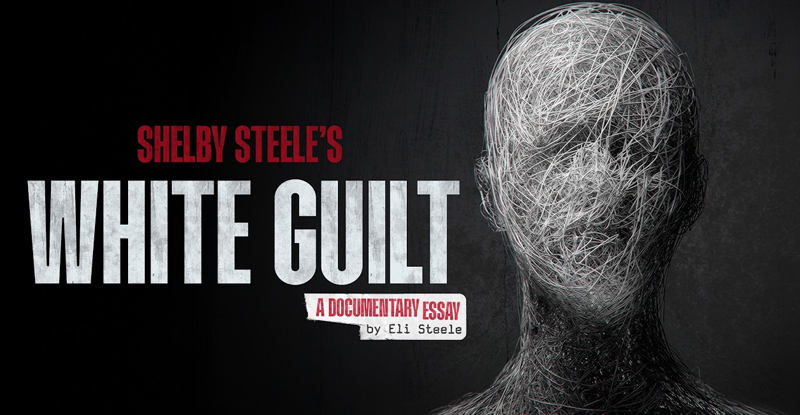
You might be intending to view Shelby and producer son Eli Steele’s new film White Guilt, released on October 6th.
Perhaps you saw the trailer:
Or you read William McGurn’s recent column in the Wall Street Journal.
Then again, you could still be troubled—years later—after having read Ibrahim Kendi’s How to Be an Antiracist, and yearn for a return to rational thought regarding race relations in America. (1)
Of course, the best reason of all would be that you read the 2006 book White Guilt and found it excellent, even a breath of fresh air addressing our nation’s racial struggles. (2)
Whatever your reason, watch this film: it is an hour and half of deep thought and rational analysis of race in America.
The film portrays two journeys, that of Shelby Steele himself, and that of the civil rights movement. It encompasses the story of Steele’s personal growth and his interaction with American civil rights history.
The very beginning of White Guilt sets the tone for the film:
Our redemption does not lie in more collective guilt.
It lies in the timeless American principles my father’s parents marched for: individual dignity, equal accountability under the law, and the radical idea that every human being is capable of freedom.
That is why we dedicated this film to America on her 250th birthday.
Steele states that white guilt is “the terror of being seen as a racist” and forms the core of current problems in American race relations, stymieing their improvement.
“Do goodism is destroying the people” who are supposedly the ones being helped.
Acknowledging the thought of Thomas Sowell, Steele affirms that this action helps keep the disadvantaged…disadvantaged. Sadly, White Guilt has grown to be aligned with Black Power.
The majority of the film is narrated by Shelby Steele as he walks and walks, interspersed with appropriate historical news items to support and illustrate his thoughts. His narration is steady, measured and elegant.
He refers to Chautauqua in his book and in the beginning of the film. (3) Steele respects this concept, makes personal use of it, and describes it as “narrative form…a kind of lecture through a subject that people would listen to for hours…and the faith was that digression would bring fuller understanding.”
In his book he thinks extensively during long drives and later writes; in the movie he thinks and talks during long walks.
He never raises his voice or engages in strident argument in the film; this is quite a countercultural means of reasoning—and perhaps even convincing—in this day and age. The result is a clear message, powerfully delivered.
Steele, currently a Senior Fellow at the Hoover Institution at Stanford University, has experienced quite a journey since his birth in 1946. (4) As a college radical, he dropped ashes on the office rug of Dr. Joseph McCabe, President of Coe College in Iowa. Later, he traveled to Algeria to visit Black Panthers in exile. Like Sowell, Steele eventually rejected black radicalism and became a professor and writer.
Marxism, explains Steele, is behind much of our troubles in race relations.
As always, it’s the oppressed versus the oppressors. “Identity has flipped merit” and worsened what we think of ourselves and each other.
The “Oppressed” unite for power: Palestinians join with Blacks against Jews and Whites; the goal is to put Palestine front and center.
Tribalism reigns. Evil is good and good is evil.
“The one truth I’ve known my entire life is that the principles of Western Civilization are not tribal; they are universal.”
Steele cites a number of individual stories reflecting our American dilemmas of diversity and race.
We hear playwright David Mamet, a convert to conservatism, aver: “The brain dead liberal lives in ideology.”
Jodi Shaw, former librarian at Smith College, describes her lawsuit challenging the college’s DEI discrimination.
Andrew Gutmann relates his reasons for pulling his daughter out of Brearley School in New York City. (5)
Former Navy Seal Paul Rossi, UCLA medical student, describes the lowering of standards—based on racial quotas—at UCLA Medical School.
Steele finds the answer to the problem of white guilt in one word: Courage.
“Believe in the founding principles of America. Most of all, believe in freedom itself…freedom is within you, seize it or don’t!”
White Guilt is an enlightening, thoughtful and extraordinary film. It offers a rational explanation for much of the trouble in race relations in America, as well as support for a return to the ideals of our nation’s founding.
—
1. Even if you hadn’t read that book, you might still be bothered by the national frenzy supporting civil rights sainthood for Kendi by America’s elite. Alas, all did not turn out well for him
2. White Guilt: How Black and Whites Together Destroyed the Promise of the Civil Rights Era, Harper Perennial Books, 2006. Two other excellent books on race: The Virtue of Color Blindness by Andre Archie and The Unprotected Class: How Anti-White Racism Is Tearing America Apart by Jeremy Carl.
3. Merriam Webster online: Chautauqua: any of various traveling shows and local assemblies that flourished in the U.S. in the late 19th and early 20th centuries, that provided popular education combined with entertainment in the form of lectures, concerts, and plays, and that were modeled after activities at the Chautauqua Institution of western New York
4. Steele was born in Chicago on New Year’s Day, 1946. Both parents were founders of CORE (Congress of Racial Equality)
5. Andrew Guttman withdrew his daughter from the elite Manhattan Brearley School over their Woke/DEI policies and teaching, issuing a lengthy written statement of the administration’s offenses.
White Guilt film website
Stream the film on this site or watch on Amazon Prime, Apple TV, YouTube/Google TV
Interview about film:






Leave a Comment