

By Hope Hodge Seck | Military Times
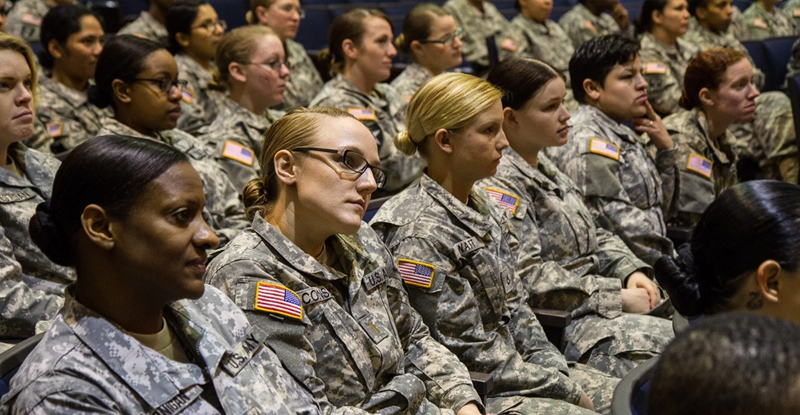
Days after Pete Hegseth was installed as the Pentagon’s top civilian, some all-volunteer teams of service women working to address obstacles and improve policy became casualties of his war on diversity, equity and inclusion, or DEI.
But a provision tucked into the $900 billion defense policy bill would bring them back.
The National Defense Authorization Act for fiscal 2026, which passed the House Dec. 11, contains a provision that restores service-level women’s initiative teams.
The bill would require the service secretaries to establish one of these teams for each of the five services under the Defense Department within a year after the bill becomes law.
These teams, composed of women in uniform representing “a variety of ranks, backgrounds and occupational specialties,” are to be tasked with identifying and addressing issues that hinder women’s service; supporting recruiting and retention; recommending policy changes that support the needs of women in service; and fostering a sense of community, according to language in the bill.
The legislation requires the secretary of defense to submit an annual report for the next five years on the activities and progress of the women’s initiative teams, including a summary of their activities, assessment of the policy impact they’ve had and any recommendations for legislative or policy changes to further support their success.
The language restoring the women’s initiative teams originated with Rep. Chrissy Houlahan, a Pennsylvania Democrat who served as an Air Force officer on active duty and in the Reserves from 1989-2004.
Despite a contentious political climate and suspicion around policy specific to women in the military, Houlahan said she hoped that “common sense was the thing that won the day” in allowing the women’s initiative teams provision to make it into the final version of the NDAA.
“More importantly, it’s all about readiness for the military in general,” she told Military Times in an interview. “As we are 51% of the population and about 20% of the folks who serve in uniform, it’s important that that demographic, for lack of a better word, be supported.”
Houlahan said she believed that the teams were “just a convenient target from a new administration.”
“When cooler and calmer, more rational heads got in the game, and Congress did its job, we were able to bring it back to life,” she said.
The legislation would also make the women’s initiative teams consistent across the services.
The Air Force‘s team had been serving for nearly two decades when it was ordered to cease operations following President Donald Trump’s inaugural raft of executive orders in January.
The Navy’s team had been in service for less than a year and was not formally canceled by the service.





Leave a Comment