
By Lt. Col. Eric Vogel, USAF ret, USAFA ’73
“The 4th of July has been celebrated in Philadelphia in the manner I expected. The military men, and particularly one of them, ran away with all the glory of the day. Scarcely a word was said of the solicitude and labors, and fears, and sorrows, and sleepless nights of the men who projected, proposed, defended, and subscribed to the Declaration of Independence.”
—Benjamin Rush, in a letter to John Adams
Rush, a signatory of the Declaration of Independence, wrote these words in 1811. While mentioning the “glory of the day,” he lamented the forgetfulness of his fellow Philadelphians regarding the events of 35 years prior. His words also serve as a wake-up call to our country in 2026, as we celebrate the Semiquincentennial of our nation—have we, too, forgotten the sacrifices referred to by Rush?
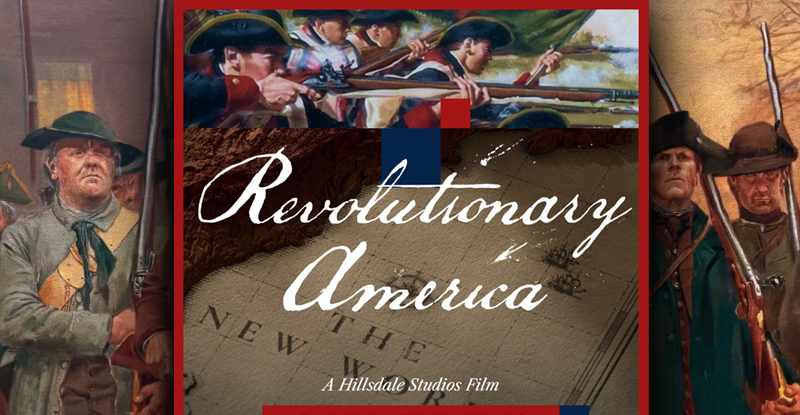
How fitting, then, that we hear his thoughts at the very beginning of the recently released—and magnificent—Revolutionary America. This Hillsdale Studios film, which just ended a limited three-day release in select theaters, is a must-see for patriots, and ought to be viewed by all Americans of middle school age and up. The words of Rush regarding the “solicitude and labors, and fears, and sorrows” of the signers of the Declaration of Independence resonate as a dominant theme throughout the film.
Yes, most Americans know the basic outline of the American Revolution. But this film is much, much more—this is about a distinct revolutionary America. As such, it is not a traditional documentary, mere historical review, or live-action movie; at close to two hours, it is an epic recounting of the passion, pain, sacrifices, and dreams of colonial Americans as they partook in the foundation—and the very creation—of our country. (Note: Revolutionary America is not to be confused with The American Revolution production of Ken Burns.)
And all this is brilliantly presented in a unique style that is just as exciting, engrossing and emotional as any movie about the American Revolution filmed with live actors.
There are at least five distinct characteristics of Revolutionary America which contribute to its overall excellence.
The music carries us through the tumultuous years leading to the Revolution, the War itself, and the establishment of our Constitution. The soundtrack is masterfully synced with the highs and lows of threats, decisions, dissension and battles, accentuating the viewer’s emotional connection to our country’s incredible history.
The narration of Tom Selleck alternates with outstanding descriptions of the significant events of this history, all eloquently delivered and clearly explained by passionate, knowledgeable and focused Hillsdale professors.
Critical actions are often depicted by paintings and pictures from vintage books, expertly brought to life by the zooming and panning of the camera, creating a 3D Parallax effect. (Note: sometimes referred to as the Ken Burns effect.)
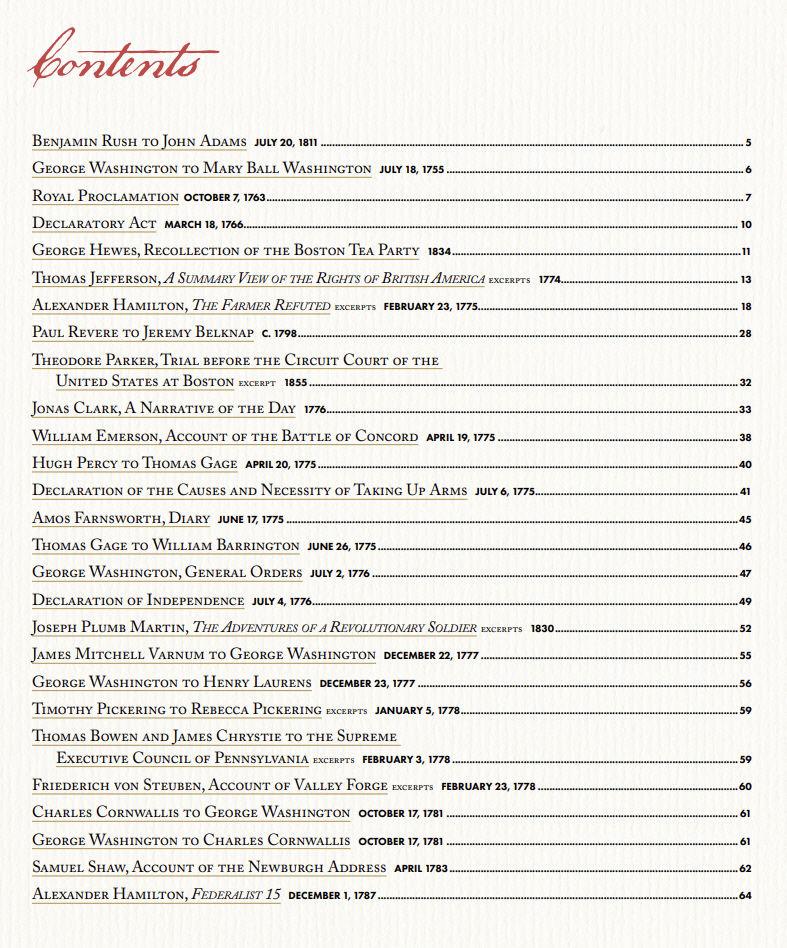
Portions of period letters and documents, read by actors with appropriate voices and accents, complement and add emphasis to the points being made in the narration or in the interviews. For example, in addition to the letter of Benjamin Rush referenced above, readings include quotes from William Emerson’s “Account of the Battle of Concord” (1775), Friedrich von Steuben’s “Account of Valley Forge” (1778), and correspondence between George Washington and Charles Cornwallis (1781).
(See https://www.fathomentertainment.com/releases/revolutionary-america/ and click on “Documentary Companion” for a complete list as well as the documents themselves.
Revolutionary America: A Documentary Companion (pdf)
Finally, battle scenes are depicted through the use of sophisticated dioramas, including the “firing” of weapons, and clearly explained through narration and superimposed diagrams delineating troop movements. Additionally, important historical locations are portrayed with footage of those sites today as well as AI recreations (Boston harbor, with period ships and wharves, is exquisite).
The result is a film which will keep you intrigued—even spellbound—despite your knowledge of the outcome.
Several takeaways will stand out for those who, like this writer, were not history majors.
The founders were not reaching for diversity; they were focused on “maintaining an identity as one people.”
Among the giants of the Founding Fathers, John Adams and George Washington are featured. Adams is cited for his insistence on due process and the rule of law in the prosecution of British soldiers involved in the Boston Massacre. Washington, of course, is often mentioned and praised; among his many achievements, he masterfully quelled, with dignity and humility, an officer uprising in Newburgh, New York, after the end of hostilities.
The winter of 1777-78 at Valley Forge was not the only low point in the conflict: there were “so many moments that all could be lost.” The first years of our new country were chaotic, made so by the structural and political struggles of forming a functioning government, and the economic crises of hyper-inflation and problematic individual state-issued currencies.
Finally, perhaps most significantly, the 150 year period prior to the revolution was preparation for what would occur in the path to independence. As Parliament tightened control, the colonists initially “fought not to fight,” but with various acts (Stamp, Coercive, etc.) and the arrival of troops, the deterioration of their rights as British subjects became a dominant issue. Colonists turned to sacred rights and eventually natural rights. Pushback increased; after the Battles of Lexington, Concord and Bunker Hill, the Second Continental Congress passed the Declaration of the Causes and Necessity of Taking Up Arms; the fight was on. The colonists’ many years of independent living, self-reliant lifestyles, “can-do” attitudes and community spirit would sustain them throughout the war.
Make a mental note and remember to view this masterpiece. A representative of Hillsdale College stated that it should eventually be available on the college website, through a link to YouTube. Also, keep an eye out for it to appear on other streaming services.
Again, Revolutionary America is a “must-see”. As Larry Arnn, Hillsdale President and Professor of Politics and History, stated in the introduction to the film: “It is the greatest story of political freedom ever.
Revolutionary America: A Documentary Companion (pdf)



Leave a Comment