

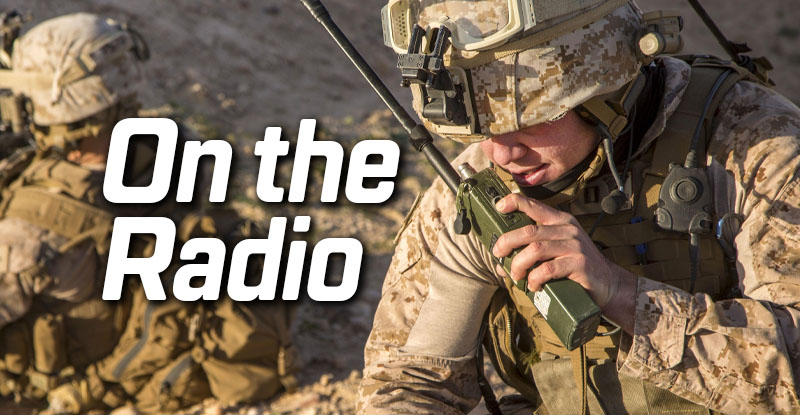
STARRS Board of Directors member Major General Joe Arbuckle, USA ret, was interviewed today on the Kim Monson Radio Show. Start listening to his interview at the 27:43 mark:
.
From the show notes:
Retired Army General Joe Arbuckle, board member of STARRS, walks listeners through what he calls a coherent Trump grand strategy in which Iran is one piece of a campaign to push China out of the Western Hemisphere and back from the Strait of Hormuz. Operation Midnight Hammer, Operation Epic Resolve, and what Arbuckle describes as a U.S. counter-blockade of the Strait have, in his reading, strangled Iran economically while denying Beijing the 80 to 90 percent of its oil that transits the chokepoint.
Arbuckle traces the strategy across the Western Hemisphere as well, citing the recent removal of Chinese influence from the Panama Canal, Operation Absolute Resolve in Venezuela, and the renewed framing of the Monroe Doctrine.
On STARRS, he previews “American Creed Threatened by Radical Indoctrination,” the briefing he and Colonel Ron Scott have been delivering at the Center for American Values and elsewhere, and he ties the COVID-19 vaccine mandate fight to the Religious Freedom Restoration Act and the legal flaw in mandating an emergency-use authorization product without informed consent.
“China is the big loser in all these things that he’s doing.”
Joe Arbuckle, Board Member, STARRS
STARRS Presentation: The American Creed Threatened by Radical Indoctrination
Retired general links Iran war, Maduro raid, and Hormuz blockade into one China strategy (Kim Monson Show, May 8, 2026)
Retired Maj. Gen. Joe Arbuckle, a board member of STARRS, told The Kim Monson Show on May 8 that the Iran war should not be read in isolation, but as one front in a coordinated U.S. campaign aimed at China.
“President Trump has a grand strategy here. He’s doing a lot of things at once,” Arbuckle said. “And you combine them all together, the end result is, and here’s the bottom line, China is the big loser in all these things that he’s doing.”
Arbuckle named five moves on Trump’s ledger: removing Chinese-linked operators from the Panama Canal, Operation Absolute Resolve in Venezuela, Operation Midnight Hammer against Iran’s nuclear program in 2025, the current operation against Iran’s military and industrial base, and the U.S. Navy’s blockade of Iranian ports. The thread that ties them, in his telling, runs through Beijing. Trump travels to China on May 14-15 for a summit with Xi.
The framing connects coverage that has so far run as separate stories.
The Panama Canal reset
In March 2025, a BlackRock-led consortium agreed to a $22.8 billion deal to acquire 80 percent of Hutchison Port Holdings, a portfolio of 43 ports in 23 countries that included the Balboa and Cristobal terminals at the Panama Canal. The terminals had been operated by a Hong Kong-based subsidiary of CK Hutchison. The transaction placed them under American operational control.
A second prong followed. On February 24, 2026, Panama formally annulled the CK Hutchison concessions following a Panamanian Supreme Court ruling that they were unconstitutional. Interim operations of Balboa transferred to A.P. Moller-Maersk and Cristobal to Mediterranean Shipping Co. Beijing protested both moves. Panama also exited China’s Belt and Road Initiative after a February 2025 visit by Secretary of State Marco Rubio.
Maduro raid
On January 3, 2026, U.S. forces conducted Operation Absolute Resolve, bombing northern Venezuelan air defenses and seizing Nicolas Maduro and his wife, Cilia Flores, from a compound in Caracas. Both were flown to New York. Both pleaded not guilty in Manhattan federal court on January 5 to narco-terrorism and drug-trafficking charges. Defense Secretary Pete Hegseth, on January 29, called the raid “the most sophisticated, powerful raid, not just in American history, I would say in world history.” Vice President Delcy Rodriguez was sworn in the same week as acting president of Venezuela.
Maduro remains in U.S. federal custody in Manhattan, with Rodriguez running a transitional government in Caracas.
Midnight Hammer and Epic Fury
Arbuckle compressed two Iran operations into a single arc.
The first, Operation Midnight Hammer, struck Iran’s nuclear sites at Fordow, Natanz, and Isfahan on June 22, 2025. Seven B-2 Spirit bombers dropped 14 GBU-57 Massive Ordnance Penetrators in the largest operational B-2 strike in U.S. history and the first combat use of the GBU-57. Joint Chiefs Chairman Gen. Dan Caine told reporters that initial battle damage assessments showed “extremely severe damage and destruction” to all three sites. A July 2025 Pentagon assessment estimated the program was set back one to two years.
The second is Operation Epic Fury, launched February 28, 2026. The White House said on April 8 that the operation lasted 38 days, struck more than 13,000 targets including 2,000 command-and-control sites, sank 150 warships and every Iranian submarine, eliminated 85 percent of Iran’s defense industrial base, and ended in an Iranian agreement to a ceasefire. The campaign opened with simultaneous U.S. and Israeli strikes that killed Iran’s Supreme Leader, Ali Khamenei, and other senior officials.
The Hormuz pivot
On April 13, 2026, the U.S. military imposed a naval blockade of Iranian ports under U.S. Central Command and Adm. Brad Cooper, after talks in Islamabad failed on April 11-12. CENTCOM clarified that the blockade applied to ships going to and from Iranian ports, not transit through the strait itself. By May 1, the Pentagon estimated the blockade had cost Iran $4.8 billion in oil revenue, with 31 tankers carrying 53 million barrels stuck in the Gulf. In early May, CENTCOM launched Project Freedom, a separate operation escorting commercial ships through the strait.
Arbuckle described the move as economically strangling Tehran and indirectly squeezing Beijing.
The Strait of Hormuz is a chokepoint of global consequence. The U.S. Energy Information Administration reports that 20 million barrels of oil passed through the strait per day in 2024, about 20 percent of global petroleum-liquids consumption, with 84 percent of crude flows headed to Asian markets. China is the single largest destination, taking 37.7 percent of all crude moving through Hormuz, according to EIA data reproduced in a Visual Capitalist analysis. Pressure on Hormuz is, structurally, pressure on Beijing.
The NATO question
Arbuckle was harder on America’s allies. “We cannot rely upon our NATO allies. They fail to support our operations,” he said.
The reality is divided. Spain, the United Kingdom, France, Australia, and the European Union declined to back the U.S. blockade plan, with the U.K. and France floating an alternative “multinational mission” that critics described as largely symbolic. Spain denied the U.S. the use of Rota and Morón bases for Iran strikes. On March 15, 2026, Trump publicly asked NATO and China to help reopen the strait. Both declined.
NATO Secretary-General Mark Rutte described Europe as supportive of the U.S. action. Trump publicly thanked him. Several smaller member states voiced support, while Poland’s defense minister said on March 3 that Poland was not participating in U.S. military operations against Iran.
Beijing in six days
The Trump-Xi summit was announced in late March, before the blockade and before Project Freedom. As of May 7, the White House confirmed Trump’s departure for Beijing, with Boeing CEO Kelly Ortberg and Citigroup CEO Jane Fraser among the executives joining him. Iran is expected to be on the agenda alongside trade.
Arbuckle’s argument is that the agenda has already been set on the ground. The five-front ledger he laid out on the air, Panama, Caracas, Fordow, Tehran, Hormuz, was assembled, in his framing, so that Trump arrives in Beijing with leverage. Whether that read survives contact with what actually happens at the summit is the question of the next two weeks.
Arbuckle laid out what he called the four instruments of national power earlier in the segment: political and diplomatic, economic, psychological operations, and military. “He is doing a masterful job at combining those four elements of our power to impose our will on the Iranians and China in the bigger picture,” Arbuckle said.
AI TRANSCRIPT
Kim Monson
I’m pleased to have on the line with me General Joe Arbuckle. He’s retired Army, and I want to talk with him about an organization that he’s on the board, STARRS, which is eliminating CRT, DEI, and woke ideology in the military, and then also about the Iran War. General Arbuckle, welcome to the show.
Joe Arbuckle
Thanks a lot, Kim. It’s always a pleasure to be on your show and speak to you again. And And also thank you for your continued great work in restoring our country back to fundamental values and specifically the state of Colorado.
Kim Monson
Well, we’ve got a— we’ve got our work cut out for us here in Colorado, General Arbuckle. But I really think something positive— there’s something— there’s an undercurrent of positive there. And it’s because so many people have had an uneasy feeling something’s not quite right. And you and others at STARRS, S-T-A-R-R-S, that’s stars.us, have been sounding the alarm on what’s happening in the military for a while. So bring us up to date with what is happening at STARRS.
Joe Arbuckle
Sure, be happy to. You know, I’m still on the board and we— one of our main missions is to educate the public on what’s happening to our country. And, what I’m talking about here is the movement of indoctrination of socialism and Marxism in our country, which really goes back to the 1930s with some Marxists that came over from Germany and set up shop in the Teachers College at Columbia University. That’s been expanding ever since and exploded in the 1960s, of course, with the Cultural Revolution. But to get that point across, we’ve created a really powerful presentation called The American Creed threatened by radical indoctrination. And here we’re starting with our American creed, which is of course found in our Constitution, the Declaration of Independence, the Bill of Rights. And we talk about how that is so fundamental to our country. That’s where we came from. And then how that is threatened by socialism and Marxism. We’re giving this briefing to any groups that are interested in hearing it. And most recently, we were down in Pueblo at the Center for American Values. You know that very well, where the major food banks. Yeah. Medal of Honor recipient.
Joe Arbuckle
And by the way, Drew is one of our great advisors. And if anybody wants to take a look at it, it’s on our STARRS.US website. That’s S-T-A-R-R-S dot U-S. And you just have to scroll down. There’s a lot of information there, but you’ll see a picture of myself and Colonel Ron Scott giving it. So that’ll give you a glimpse. And if anybody’s interested, again, we give it to church groups and various veterans organizations, anybody that It really wants to get spun up on what’s happening in our country.
Kim Monson
Okay, and so the best way to request that is to go to the website, correct? And I see you can sign up for the newsletter, and I’m sure it is an extensive website, so there’s a lot of things going on there. What— so, General Arbuckle, I’m the president of CUT, Colorado’s Union of Taxpayers. Taxpayers. And it’s an all-volunteer group. We’re celebrating our 50th birthday this year, and we look at legislation down at the State House through this lens of how does it affect the taxpayers, TABOR, Colorado’s Taxpayers Bill of Rights, property rights, and parental rights. And then I’ve got two young producers— well, my producer, Producer Joe, and there’s another producer here They’re both 27 years old, and we started something where we are doing book reviews. So the first book I chose, which was Henry Hazlitt’s Economics in One Lesson, so we got through that. Then Producer Luke chose Machiavelli’s The Prince, and we just finished that. So Producer Joe has chosen The Communist Manifesto, and we just started that, and we just didn’t even get through the preface. But the bottom line with socialism, with communism, is the abolition of property rights.
Kim Monson
And, and yet inherent in the American idea is property rights. And so when we see legislation that starts to put people into different groups and taxing them differently, people may think that they’re helping one group, but when it’s, it’s it’s inherent in socialism and communism to put people into groups, treat them differently, and then try to divide them. Do you agree, I guess?
Joe Arbuckle
Oh, yes, absolutely. You’re exactly right. Two points are real quick. I would encourage your listeners to get on the web and do a search for the 45 communist goals that were read into the Congressional Record in 1963, 45 goals. And then ask yourself as you read those, how much— how well have they accomplished their goals? It’s shocking when you look at that. Number 2, coming back to what you just said, yeah, that’s the basis of communism. That is to divide people into groups, set up an oppressor and oppressed mentality. And with that, of course, the oppressed want to have special privileges that can be found in many ways, such as taxes, like you said, more taxes for some and less for others. But the whole idea is to put people into groups and pit them against each other. Now bring that forward to diversity, equity, and inclusion. That’s exactly what’s at the heart of that. People are divided into groups based upon their identity characteristics, and that would be their skin color, their gender, their sexual orientation, ethnicity and then set up this victimhood stuff where one group is being oppressed and the other is not.
Joe Arbuckle
And that creates conflict. And the end result out of communism that they want from all that is revolution. Back in 1848 when Marx and Engels published the Manifesto, of course it was based upon economic disparities, but today they’re using that based upon social disparities, as I said, based on identity groups, skin color, etc. But the fundamentals of Marxism never change. It’s all about dividing people, pitting them against each other, creating unrest, and hopefully at the end of that revolution— today it’s a cultural revolution.
Kim Monson
It’s interesting you would say that about on those groups because, I went online for the Colorado Parks and Wildlife. They were taking comments regarding, this, it’s a group, it’s probably from Jared Polis’s partner regarding animal rights, but they want to get rid of commercial fur, the commercial fur business here in Colorado, and they are trying to do that via the bureaucratic state. People could make comments, and the last day to do that was on Sunday the 3rd. So I went online to make my comments. All I wanted to do was just make comments, but you had to go through and answer a variety of questions. And the questions were the division questions: what’s your ethnicity, what’s your, your gender identity, all those things. I thought, that is so crazy to me that they would ask those questions when I just want to make some comments at the Colorado Parks and Wildlife. So to your point on STARRS and the military, this DEI, diversity, equity, and inclusion, or SEL, social emotional learning, this is so permeated throughout our society right now that we, we have to A, recognize it, and B, stand up against it.
Kim Monson
So I scroll down and I— all my answers were prefer not to answer, prefer not to answer, which is what I think we really should probably Answer.
Joe Arbuckle
Yes, exactly right. Yeah, you’re right, we’ve been indoctrinated since the ’60s with this sort of thing, and it’s— and it really accelerated in 2008 with Obama. And, fortunately we had a Trump came in for 4 years and slowed it down. Then Biden comes in and really puts it on steroids, pushing this DEI, critical race theory, all that’s tied together directly. And yes, it has permeated our society and unfortunately our military. And that’s frankly why STARRS was born about 6 years ago with the CRT being injected into the military at the Air Force Academy. That’s how this all started. That’s how we came together as a bunch of volunteers and looked around and said, wow, this is dangerous, we’ve got to do something. And that’s, that’s really at our roots. And we have had 2 strategic goals and STARRS, as I mentioned, one that is get rid of PPE in the military. The other is to get rid of the illegal COVID vaccination policy. We played a key role in getting that done. But if people want to dive into this, I said, and look at briefing, I highly encourage it on the website. And coming back to your question, if there is a group that wants us to present it, you know, they can let you know, let me know, or get on our STARRS website and we’ll go from there.
Kim Monson
Okay. And one other thing over at the Star’s website is you have, highlighting this movie Duty to Disobey. And Pam Long, who is a great contributor here at the Kim Munson Show— she’s an author and a guest regularly— had brought this to my attention. And we had Brad Miller on yesterday, who, he’d actually, denied or disobey disobeyed. He would not take the COVID vaccine, and he would not order his soldiers to do that as well. So that’s how this movie came about. And, it’s important that people buy tickets by May 15th. The showing is June 30th, but to buy your ticket early, because then that shows support for the documentary, that it can be shown here. There’s 4 locations here in Colorado. So I thought, as I looked at your website, I thought, that’s It’s just so interesting. We had Brad on yesterday and we have you on today.
Joe Arbuckle
Yeah, very coincidental. Also on that is Lieutenant Colonel Therese DeLong, Dr. DeLong, and she’s quite famous, as you know. We were talking to her. I’ve been in communication with her very regularly. I was in communication with her last week, and she’s got a wealth of information about the extreme harms done to members of our military because of the medical conditions of vaccination.
Kim Monson
And it’s, it’s interesting. Last night I was at an event, and, now it seems like everybody’s younger than me now, General Arbuckle. But a young guy who, I had interviewed him a few years ago, he’s a neighbor and he’s a reservist, but he came up with his wife, and I didn’t recognize him initially because he had a beard. And he’s— I said, oh, and he said, I just got back from a 10-month deployment with Special Forces in the Middle East. And I said, I think I need to interview you again for America’s Veterans Stories. But we were talking about the vaccine. And I said, I’d had Brad Miller on yesterday morning. And he said that he ended up, because the military required him to do that, to take the vaccine. And so it was a really— it was not only a weird time in America, but a really weird time in the military with that whole COVID thing.
Joe Arbuckle
Yeah, but let me explain something on the vaccine real quick because people may be wondering why we are against that, the vaccine. Lord knows I’ve had every vaccination in the world over 33 years in the military. We’re not against vaccinations, obviously they’re important. What we’re against was this particular one because it was issued under emergency use only authorizations, which means that before a service member was required to take it, they had to have informed consent about the dangers associated with vaccination. That did not happen. People were just forced to have it, and that’s where it became illegal. On top of that, for those of who objected based upon religious grounds, they were ignored basically, and that violated the Religious Freedom Restoration Act. So there’s a couple things there very seriously wrong with this sick for vaccination, and that’s the root cause.
Kim Monson
Okay, thank you for that clarification, General Arbuckle. And we’re going to, continue with General Arbuckle. I’d like to get his thoughts about this Iran war.
Kim Monson
And welcome back to the Kim Munson Show. We are talking with General Joe Arbuckle, retired Army, and he is a board member of STARRS, and that website is starrs.us. So General Arbuckle, the Iran War, what’s your perspective on this?
Joe Arbuckle
Well, first let me recognize our great military. I am extremely proud at the way our military has been performing here. In that operation and two previous— I mean, their professionalism and dedication is unmatched, and hats off to them. So that’s number one. number two, yeah, I’m going to come back to the war itself because in order to understand it, there’s some other things that need to be put into perspective here real quickly. And that is, Trump has a grand— President Trump has a grand strategy here. He’s doing a lot of things at once, and you combine them all together, the end result here’s the bottom line: China is the big loser in all these things that he’s doing. For example, he, he basically got China kicked out of the Panama Canal recently. He just declared the Gulf of Mexico now the Gulf of America. He’s, talked about Canada and our relationships there, the need to have Greenland as a strategic asset in the world, and it certainly is. And in the Western atmosphere. Of course, he’s basically reinstating the Monroe Doctrine, which says the United States has to control what’s going on in the backyard.
Joe Arbuckle
And with Operation Absolute Resolve, he got Maduro out, of course, of Venezuela. That had a positive spin-off effect in Peru and Brazil, who are also involved in drugs and stuff, in the United States and Cuba. All this is in Western Hemisphere, and those actions he took again hurt China. Because of their involvement, China was putting deep inroads in our Western Hemisphere, our backyard, in other words. Turn to Southwest Asia. Now, first Midnight Hammer, of course, that happened to try to knock out the nukes in Iran and their ballistic missile capability. We got most of it, not all of it. And so now Epic Resolve has been launched in February. And most recently, as you know, he’s blocked the Straits of Hormuz, which is a brilliant move because that strangles Iran economically. Economically. And that’s a key point. And out of that also is a loser— that’s China— because 80-90% of China’s oil comes through, the Straits out of Iran. And out of that, we also learned that we cannot rely upon our NATO allies. They failed to support our operations in that. So there’s a lot of strategic things that are happening, that are positive, surrounding this particular operation.
Joe Arbuckle
Tied to that, you don’t hear much out of Ukraine, Europe. And Trump is saying, hey, NATO, that’s in your backyard, you’ve got to take charge of that. So there’s another major geopolitical strategic move that’s tied with his grand strategy. And so my point is, all this— the big loser is China. And that’s great because he’s going there next week, as you know, to talk to Xi. And that’s going to be a very interesting conversation. Where is the war going in Iran? I think the next week or two are going to be key in this because the country, as I said earlier, is economically strangling. They’ve got a lot of internal turmoil right now. And here’s our problem from the United States: we don’t know exactly who’s in charge, at least I don’t. Maybe our person, our intelligence people do, but there are multiple fractions there. They’ve got the mullahs, Khamenei Jr., who’s now been called the great leader. they’ve got the parliament, some spokesmen out of their parliament. They’ve got a president coming out of Iran speaking. And the real problem is the IRGC, the military, the radical parts of their military. And I think personally that they’re probably calling the shots, but, I don’t know that for certain.
Joe Arbuckle
Then they have their regular army as another faction. Then you’ve got the normal people within Iran. So who’s in charge? That’s the That’s the big issue. And you can’t trust the negotiators because they can’t make decisions. They’re just mouthpieces. So it’s a very complex situation. Again, I think it’s going to come to head in the next week or two.
Kim Monson
What, what’s your thoughts about— there are those that say that Trump is being controlled by Netanyahu, but what would you say to that?
Joe Arbuckle
Oh, absolutely not. There’s nobody that controls President Trump. For sure. And yeah, certainly he’s talking to Netanyahu on a very regular basis. In fact, I heard Netanyahu say yesterday, almost on a daily basis they’ve been in common conversations because they have to be. We’re both working the same issue here, and that is to get the nukes out of Iran, get rid of their ballistic missiles, get rid of their ability to control terrorism. And here’s where Israel comes in with Hamas, Hezbollah, and Houthi rebels. So all that’s tied together, that’s right in Israel’s backyard, so to speak.
Kim Monson
Okay. And to, to your point regarding our military, they really are performing at an amazing level. And, and every, every, every one of our military is, is loved and cherished by someone, as you know, you’re a retired general in the Army. And so anytime we are putting our military at risk, I think the American people, they don’t like the idea of war. And so I think it’s important that Trump communicate. The way you connected this whole grand strategy, I hadn’t ever really heard that, General Arbuckle, and this makes a lot of sense. And one thing on the Straits of Hormuz, I was talking to a young millennial recently, and he said he thought this was brilliant. Iran says, “We’re going to, you know, blockade the Straits,” and Trump’s like, “Okay, then I’ll blockade your blockade.” And this young guy said this is one of the most brilliant military moves that he’d ever really seen.
Joe Arbuckle
Yes, absolutely. And here’s the thing, there are 4 instruments of power every nation has. It’s, it’s number 1, the political or diplomatic. Number 2, economic is another power. 3 is a psychological operation, basically. And 4 is military. And of course, you want to use the military as a last resort in our country for obvious reasons. The point is, the art of statesmanship— and I’m talking about President Trump right now— is to combine those 4 elements of power at any given time to get maximum benefit out of those. And it’s not a, it’s not a fixed ratio, it changes almost daily. Do you have more economic power used today or more diplomatic power? Do you have more military power? What’s appropriate for the situation? He is doing a masterful job at combining those four elements of our power to impose our will on the Iranians and China in the bigger picture. He’s a masterful statesman.
Kim Monson
Okay. And when you say our will, we’ve got a couple of minutes left. What would— how would you define our will?
Joe Arbuckle
Our will is to make America first again and, stay out of foreign engagements as best we can. President Trump doesn’t like going to war. I mean, he’s made that very clear. He’s been that way forever. and getting back to our roots, in our country, which comes back to our presentation in STARRS— get rid of socialism remarks is take us back to our constitutional republic and what that means to our country, in particular our Bill of Rights.
Kim Monson
Well, General Arbuckle, I think that we— you and I have talked about this— I think that we are at a 1775 moment here in an ideological battle in our country, and it’s very exciting. I think— I don’t think, I know the Divine Provider had his hand on America 250 years ago, and I believe that he has his hand on us now, General Arbuckle.
Joe Arbuckle
Indeed. Go back to our motto, “In God We Trust.” That’s in our founding documents. It’s in our coins, our currency. Yeah, it’s got to be “In God We Trust,” and we need divine intervention to bail us out of this.
Kim Monson
Yes, and that’s why yesterday’s National Day of Prayer is so important, and it shouldn’t be just one day. Every day. Pray for our country, for our leaders. General Arbuckle, thank you to all that you are doing, to your team at STARRS. It’s been much too long since we’ve talked, so we’ll have to have you on again very, very soon, man. Thank you.
Joe Arbuckle
Always a pleasure, and thank you, Kim, and God bless America.
Kim Monson
Yes, indeed. And our quote for the end of the show is from Teddy Roosevelt. He said this: Believe you can, and you’re halfway there. So my friends, Today, be grateful. Read great books. Think good thoughts. Listen to beautiful music. Communicate and listen well. Live honestly and authentically. Strive for high ideals. And like Superman, stand for truth, justice, and the American way. My friends, you are not alone. God bless you. God bless America.



Leave a Comment