
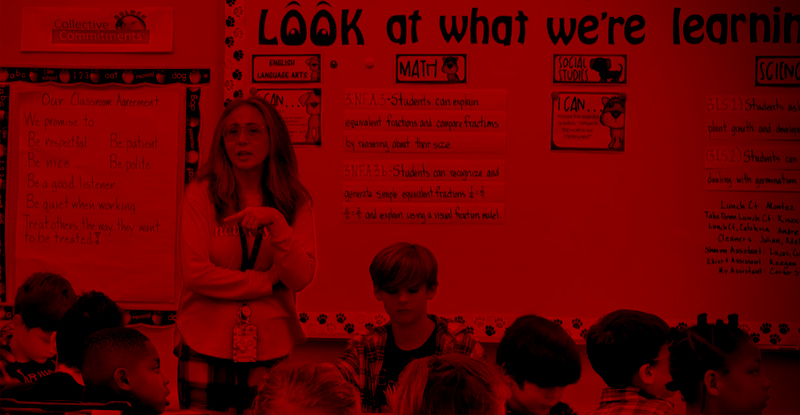
In our fight against radical, anti-American ideologies infiltrating our country and military, so many recognize the problem has its roots in the educational system, creating indoctrinated kids who later enter the military and bring that indoctrination with them.
By Emzari Gelashvili, former senior official in Georgia’s Ministry of Defense
Between 1996 and the present, the author — a former Georgian intelligence official who personally reviewed KGB operational archives in Tbilisi — has tracked the systematic application of Soviet active measures doctrine to Western educational institutions.
This article argues that the ideological transformation of American and Western universities is not the product of organic domestic political evolution alone.
It reflects, at minimum, the successful exploitation of institutional vulnerabilities by external actors — chiefly the Soviet Union’s intelligence apparatus and, subsequently, China’s Ministry of State Security — whose documented operational objectives align with the outcomes now visible across Western campuses.
The evidence spans KGB archival documents, the Mitrokhin Archive, congressional testimony, Department of Justice prosecutions, and the data produced by the institutions themselves. The article concludes with specific policy recommendations for reversing the damage.
On May 1, 2026, in Chicago, Americans marched carrying portraits of Karl Marx, Friedrich Engels, Vladimir Lenin, Joseph Stalin, and Mao Zedong. They raised red flags bearing the hammer and sickle. They distributed copies of the Communist Manifesto to children.
This was not a historical reenactment. It was a political demonstration by the American Communist Party, held in one of the largest cities in the United States, attended by thousands of people who had been educated in American schools and universities.
The question is not whether these people are sincere. They are. The question is how they got there — and who helped.
As someone who in 1996 personally reviewed KGB operational archives in Tbilisi — documents that Russian operatives had attempted to destroy before Georgian security forces could secure them — I can state with confidence: what I watched unfold in American universities, classrooms, and cultural institutions over the following three decades corresponds, in structural terms, to the operational patterns described in those archives. That correspondence requires explanation.
I am not arguing that every American progressive is a Soviet agent, or that domestic political forces played no role. The 1960s counterculture, postmodernism, and patterns of academic self-selection were independently powerful. But external actors identified these vulnerabilities and applied systematic, sustained pressure precisely where Western institutions were most exposed. The result is visible in the data — and in the streets.
The Blueprint: What the KGB Documents Actually Said
The resource allocation figure in those Tbilisi archives has never left me. Of all funds and manpower the Soviet Union expended outside its borders, no more than 10 to 15 percent went to conventional espionage — stealing weapons blueprints, recruiting military sources, the intelligence operations that dominate Western imagination.
The remaining 85 percent went to what the KGB called active measures: the systematic destabilization of target societies from within.
This was not a peripheral program. It was the primary program. And its primary target was the United States.
KGB defectors who subsequently briefed Western intelligence services described four sequential stages: Demoralization, Destabilization, Crisis, and Normalization.
Target areas were named with specificity:
- religion
- education
- media
- culture
- law enforcement
- family structure
- racial relations
- labor
The Demoralization stage — requiring 15 to 20 years, precisely the time needed to educate one generation — targeted education with particular intensity.
Operational documents specified that education was to be stripped of mathematics, physics, chemistry, and foreign languages. In their place: social grievance curricula, permissiveness, ideological conditioning.
The intended output was explicitly named: ignorance.
In 1984, KGB defector Yuri Bezmenov — who had worked for the Soviet propaganda apparatus before defecting to the West — described this program in precise detail before an American interviewer. He named the stages, the methods, and the target areas. Almost no one listened.
Twelve years later, reviewing KGB documents in Tbilisi that Bezmenov had never seen — documents from an archive on the other side of the world — I found the same operational framework. Independently. From the primary source. Bezmenov was not speculating. He was reading from a manual that still existed, in fragments, in a partially burned archive in Soviet Georgia.
Bezmenov noted that the Demoralization phase was essentially complete in the United States by the early 1980s. Once demoralization is complete, those affected cannot be reached by evidence. Their mechanism for processing reality has been altered. The infection becomes part of the host.
The Strategy: Gramsci, Frankfurt, and the Long March
The KGB did not invent the theory of cultural subversion. It absorbed and operationalized a framework developed by Western Marxist intellectuals — and then weaponized it against the West that had produced it.
Antonio Gramsci, writing in the 1920s and 1930s, argued that violent revolution was impossible in Western democracies without first destroying what he called cultural hegemony.
His prescription: the “long march through the institutions” — patient, generational infiltration of universities, media, courts, and civic structures by people committed to transforming them from within.
The Frankfurt School — a group of European intellectuals who fled Nazi Germany for the United States in the 1930s — developed what they called Critical Theory: an analytical framework that prioritized examining power structures over seeking empirical truth. Their stated purpose was social transformation, not knowledge production in the traditional sense.
Herbert Marcuse, whose work was foundational to the New Left movements of the 1960s, argued in his 1965 essay “Repressive Tolerance” that established Western societies were themselves inherently repressive — and that genuine liberation therefore required restricting speech and viewpoints associated with existing power structures. Whatever the philosophical merits of this argument, its practical consequence in academic settings has been the systematic delegitimization of viewpoint diversity as a value.
The KGB recognized the utility of this framework and funded its dissemination. This is documented in the Mitrokhin Archive — the most comprehensive collection of KGB operational records ever to reach Western hands, compiled by archivist Vasili Mitrokhin before his defection in 1992.
In the 1960s, radical students entered universities. By the end of the decade, they were refusing to leave. They occupied hiring committees, curriculum committees, and administrative positions. They made themselves gatekeepers.
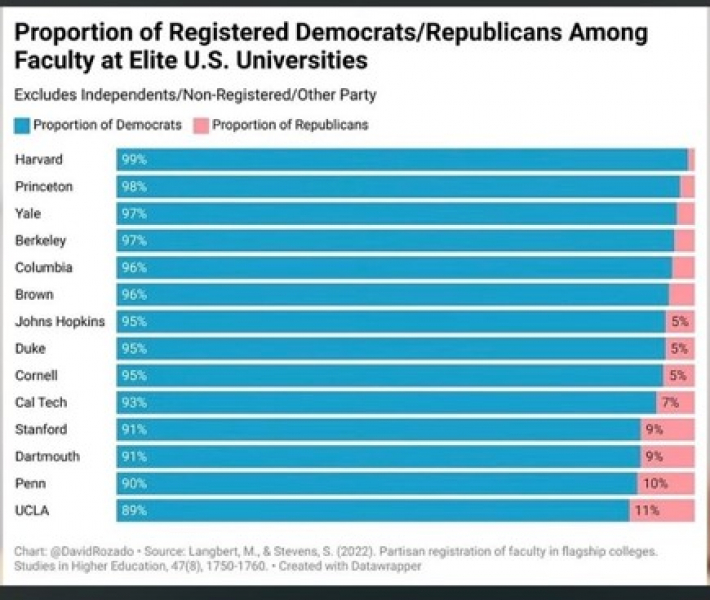
The data above is not the result of ideological drift.
A 2022 peer-reviewed study (Langbert & Stevens, Studies in Higher Education) found an average Democrat-to-Republican ratio of 8.5:1 across flagship colleges — with elite institutions significantly higher.
At Harvard, Princeton, and Yale, the ratios exceed 95:1 when independents are excluded.
The 2025 Buckley Institute study of Yale specifically found 82.3 percent Democrat faculty versus 2.3 percent Republican — a 36:1 ratio — with 63 percent of departments containing no Republican faculty at all.
These are not departments at a fringe institution. They are producing the lawyers, diplomats, executives, and policymakers who will govern Western societies for the next generation. This is ideological capture — executed, over six decades, consistent with those documented patterns.
The Mechanism: How Capture Became Control
The Personnel Pipeline
By the 1980s and 1990s, the cohort of radical students who had entered academia in the 1960s had risen to senior positions. They now controlled hiring.
A candidate’s political orientation — assessed through published work, research focus, and ideological vocabulary — determined professional advancement. Each hiring cycle produced a more homogeneous faculty, which produced more ideologically uniform candidates, which produced more homogeneous hiring.
Surveys of sociology and philosophy faculty find that significant percentages openly acknowledge they would discriminate against Republican candidates in hiring. This is a stated professional orientation — not a secret.
The Curriculum Transformation
In 1987, students at Stanford University chanted “Hey hey, ho ho, Western Civ has got to go” — and the university complied, eliminating its foundational Western civilization requirement and replacing it with ethnic studies, gender studies, and queer studies.
What was replaced: a tradition of critical reading in primary sources, exposure to Western political thought, and the analytical skills that allow citizens to evaluate competing truth claims.
Mandatory courses in intersectionality theory and “white privilege awareness” are now standard requirements across American universities. The language of these courses has become a professional credential: fluency in “LatinX,” “heteronormativity,” “safe space,” and “intersectionality” signals ideological alignment to hiring managers across the institutional landscape.
The DEI Bureaucracy
The Diversity, Equity, and Inclusion administrative apparatus now exists at virtually every major American university — employing thousands of administrators at salaries that frequently exceed those of faculty. As researcher Joshua Mitchell describes in American Awakening, this represents substitutionism: the replacement of competence with identity as the primary criterion of institutional value.
The Science Problem
The contamination has not remained within the humanities and social sciences. It has penetrated the hard sciences — and this is where the threat to American national security becomes most concrete.
The United States faces direct strategic competition with China and Russia in artificial intelligence, quantum computing, biodefense, and advanced weapons systems. The institutions that must produce the scientists for that competition are the same institutions now systematically subordinating empirical rigor to ideological criteria.
In biology, chemistry, and physics departments, faculty are subjected to pressure to purge their disciplines of what is described as “whiteness” — the association of scientific methodology and rigorous standards with racial identity.
The scientific method itself is being reframed as a culturally specific approach to knowledge rather than the most reliable instrument humanity has developed for understanding reality.
When a journal’s editorial standards are subordinated to ideological criteria, its function as a mechanism for distinguishing true claims from false ones is fundamentally compromised. The United States competes with China and Russia in advanced technology, defense systems, AI, and biomedical research.
If American scientists are trained to prioritize ideological coherence over empirical rigor, the consequences are not merely cultural. They are strategic.
The Money: External Architecture
The ideological transformation of American education did not sustain itself on ideas alone. It required sustained external financing from sources whose interests do not align with American national security.
During the Cold War, the KGB funded Western academic institutions, peace movements, and cultural organizations — documented in the Mitrokhin Archive and congressional testimony.
The funding was designed not to produce Soviet agents but to produce fellow travelers: people whose worldviews aligned, without their awareness, with Soviet strategic objectives.
After the Soviet Union’s dissolution, the program evolved.
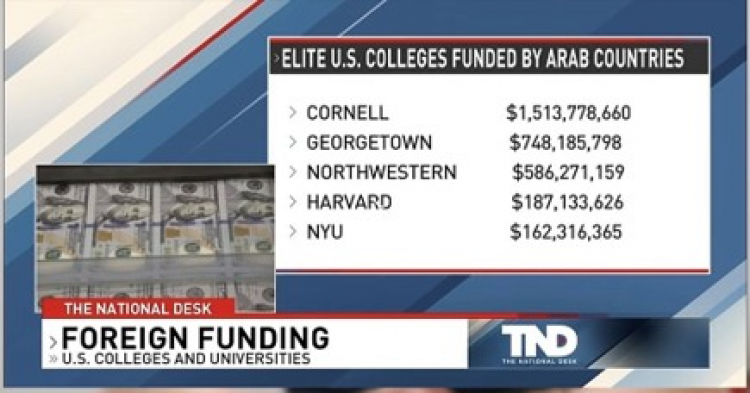
Qatar presents a more direct national security concern. A 2019 Department of Education investigation found that American universities received over $6.5 billion in foreign gifts and contracts that were not properly disclosed. Qatar was the largest single source.
The Strange Marriage: Islamist Foundations and Marxist Academia
At first glance, the alliance between Qatari sovereign wealth and American Marxist academia appears paradoxical. Islam and Marxism are ideologically incompatible. One posits divine law as the foundation of social order; the other rejects religion as false consciousness.
Yet on the terrain of American and Western universities, these two forces operate in convergence — not through coordination, but through alignment of strategic interest.
The convergence point is the delegitimization of Western cultural hegemony.
Qatari and Saudi-funded academic programs promote frameworks that center Islamic civilization and delegitimize Western historical narratives.
American Marxist academia promotes frameworks that center colonial guilt, systemic racism, and the inherent illegitimacy of Western institutions.
The language is different. The operational output is the same: a generation of students who regard their own civilization as the primary source of global suffering.
This is not a conspiracy. It does not require coordination. It is what intelligence analysts call a convergence of interests — multiple actors with different ideologies and different ultimate objectives moving in the same tactical direction because that direction serves each of them.
Qatar wants Western universities to produce graduates sympathetic to Qatari regional objectives and hostile to Israel and American Middle East policy.
Marxist academia wants graduates who reject capitalism, Western political tradition, and the legitimacy of existing institutions.
Both want the same intermediate output: the erosion of confidence in Western civilization as a going concern worth defending.
The campus protests of 2024 — in which students at Columbia, Harvard, and dozens of other elite institutions occupied buildings, called for the destruction of a democratic ally, and physically intimidated Jewish students while university administrations initially declined to enforce their own conduct codes — were the visible product of this convergence.
The protesters carried Palestinian flags funded symbolically by Qatari narratives and chanted slogans derived from Marxist decolonization theory. They were, simultaneously, the output of Soviet active measures doctrine, Qatari soft power, and six decades of curriculum transformation. No single actor planned this outcome. All of them contributed to it.
This is the architecture of 21st-century subversion: not a single enemy with a single plan, but a multipolar coalition of actors — Russian intelligence services, Chinese MSS operations, Qatari sovereign wealth, and a domestic academic establishment whose intellectual formation was shaped by all of the above — converging on a single target.
The target is the confidence of Western citizens in the legitimacy and worth of their own civilization. When that confidence collapses, everything else follows.
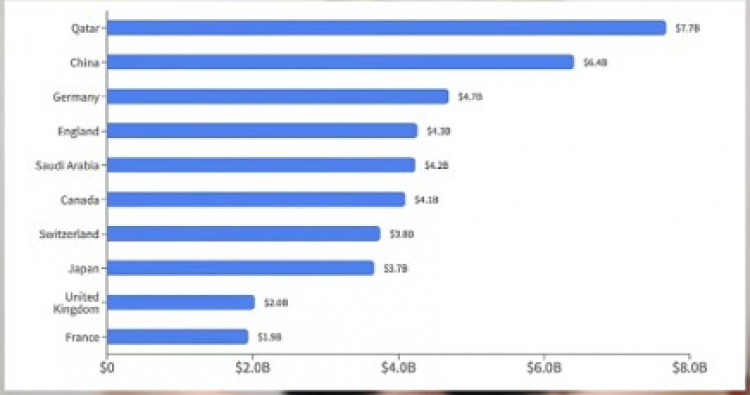
Foreign funding of U.S. universities by country: Qatar leads at $7.7 billion, followed by China at $6.4 billion — both adversarial or strategically problematic states. Source: Department of Education data.
.
China: The Patient Operator
If Soviet active measures were the original architect of educational subversion, China’s Ministry of State Security has become its most sophisticated contemporary practitioner.
The MSS was built in the 1950s on the KGB model — with Soviet advisors, training manuals, and organizational structures. Its approach to American education reflects a synthesis that Sun Tzu would recognize: the highest form of influence is exercised before the target perceives it as influence at all.
Confucius Institutes — Chinese government-funded programs embedded in over 100 American universities — provided structured access to faculty relationships and research environments.
The FBI and the National Counterintelligence and Security Center identified them as vectors for intelligence collection and influence operations. Under congressional pressure, many universities closed their institutes. But the relationships and funding dependencies cultivated by the Institutes do not dissolve when a nameplate is removed.
The Thousand Talents Program recruited American academic researchers — many holding security clearances — to transfer technology and proprietary data to Chinese institutions without disclosure. The Department of Justice has prosecuted dozens of cases. The prosecuted cases are, by definition, the ones that were detected.
In March 2026, a Stanford University student testified before Congress that the FBI had informed her she was being physically monitored on campus by agents of the Chinese Communist Party. Chinese intelligence is now conducting physical surveillance of dissident students on American soil.
Linda Sun, who rose to Deputy Chief of Staff under two New York governors, was indicted in September 2024 on charges of acting as an undisclosed agent of the People’s Republic of China. The 64-page indictment alleged she blocked Taiwanese diplomatic delegations, drafted gubernatorial proclamations favorable to Beijing, and shared internal government documents with PRC representatives.
She was an American official whose sympathies had been cultivated over years — the precise output the active measures program documented as goals.
Where Soviet operations generated immediate noise, China’s reshape the operating environment over decades — silently, structurally, with the resources of the world’s second-largest economy sustaining them.
What the Results Look Like
The KGB documented active measures program specified intended outputs with clinical precision. Examining the current state of American education against those outputs produces results that require explanation.
Academic Standards
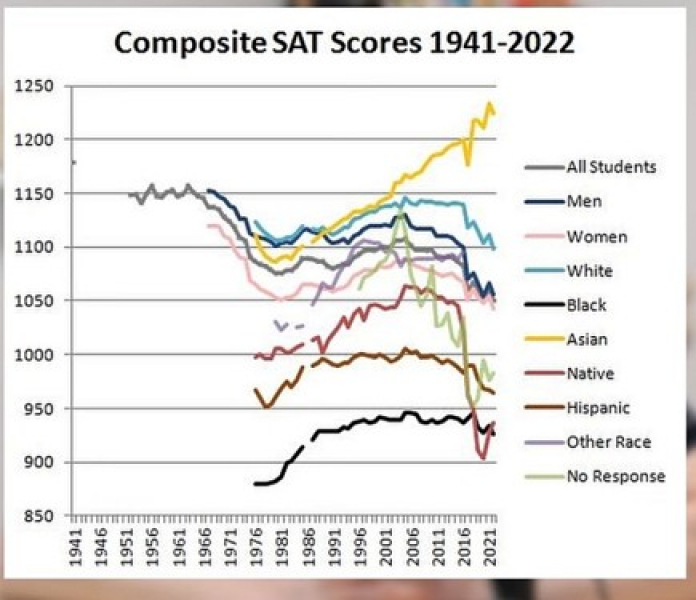
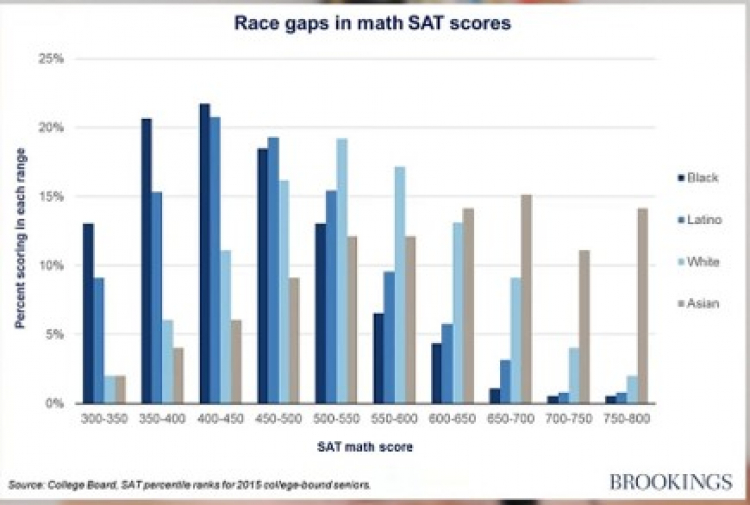
.
The United States has eliminated or significantly downgraded standardized testing requirements across hundreds of institutions. A student of East Asian descent with a 1500 SAT score may be rejected from universities that admit students of other designated identities with scores 400 points lower.
The explicit justification is equity. The operational result is the systematic replacement of academic meritocracy with identity-based allocation — in ways that correspond to those documented patterns.
The Violent Outputs
Abstract policy failures have a human face.
On July 13, 2024, Thomas Matthew Crooks, 20 years old, took a position on a rooftop 130 meters from a campaign rally in Butler, Pennsylvania, and attempted to assassinate Donald Trump. He wounded the former president and killed a bystander.
Crooks had recently received an associate’s degree. He had been formed by institutions that had spent decades systematically dismantling the frameworks — civic identity, individual moral responsibility, shared national narrative — that might have provided him with alternatives to political violence.
On September 10, 2025, Tyler James Robinson, 22 years old, shot and killed Charlie Kirk — conservative activist and founder of Turning Point USA — at Utah Valley University during a public event. Robinson later surrendered to authorities. FBI briefings and court documents confirmed the attack was politically motivated. Robinson had attended American educational institutions and had been formed by the same environment.
These individuals were not foreign agents. They were not receiving operational direction from Moscow or Beijing. They were Americans educated in American institutions.
Education was one factor among many — personal psychology, social isolation, and political radicalization all play independent roles in political violence.
But the ideological environment in which they were formed — institutions that had, by their own documented internal data, been systematically captured by a single framework hostile to pluralism and civic debate — was a contributing condition, not an irrelevant one.
This outcome corresponds to what the active measures program described as its intended result.
The most effective subversion operation is one whose targets never know they are targets — and whose final products believe they are acting from their own convictions.
The California Case
For families living in California — ground zero of American educational transformation — the abstractions become concrete.
California’s public school system has implemented mandatory ethnic studies courses grounded in frameworks whose explicit purpose is to “decolonize” education.
Those values identified as requiring decolonization include — as stated in the curricula themselves — “objectivity,” “individualism,” “the written word,” and “rational linear thinking.”
A state that has produced some of the world’s greatest scientific and technological innovation is telling its students, in mandatory credit-bearing courses, that the intellectual tools that produced that innovation are instruments of racial oppression.
The University of California system eliminated the SAT and ACT as admissions requirements. The stated rationale was equity.
The operational effect is the elimination of objective academic measurement from the largest public university system in the United States — at precisely the moment when China is intensifying investment in mathematics and science education.
California’s K-12 system ranks among the lowest in the nation in reading and mathematics proficiency while ranking among the highest in administrative spending.
The ratio of DEI administrators to students has increased dramatically over the past decade.
Working-class families of all backgrounds — those who cannot afford private schools — are receiving an education that is failing their children by every measurable academic standard, while institutions responsible produce elaborate theoretical frameworks explaining why those standards are themselves the problem.
The Continuity: What Did Not End in 1991
The Soviet Union dissolved on December 25, 1991. The program did not.
Russia’s security services — the FSB, SVR, and GRU — inherited running operations, established networks, and ideological infrastructure already embedded inside American universities, media organizations, and civil society. They did not need to rebuild. They continued.
China’s MSS, building on Soviet doctrine and four decades of its own operational experience, has added technological sophistication, economic leverage, and patience that the Soviet program could not match.
The educators who have captured American universities are not, for the most part, Soviet agents.
They are people whose intellectual formation was shaped by frameworks that the Soviet active measures program deliberately cultivated and sustained — people who believe they are pursuing justice while executing, with precision and dedication, an operational program designed in Moscow decades before most of them were born.
This is the entire point of the methodology. The defectors described it clearly: once the demoralization stage is complete, those who have been demoralized cannot be reached by evidence. The most dangerous output of the active measures program is not the agents it places. It is the believers it creates.
The pattern of aligned pressure on American educational institutions — documented in archives, in courtrooms, in congressional hearings, in the data produced by the institutions themselves, and in the political behavior of their graduates — is real, sophisticated, and ongoing. That pattern requires an explanation. The explanation does not require conspiracy. It requires history.
What Must Be Done: Policy Recommendations
Recognition of the problem is the first step. The following measures address the structural vulnerabilities that external actors have exploited and domestic ideologues have entrenched:
Foreign Funding Transparency and Restriction
• Full public disclosure of all foreign gifts to American universities. Categorical ban on funding from designated countries of concern — including Qatar, China, Iran, and Russia — until full transparency is achieved. Criminal penalties for non-disclosure.
Restore Standardized Testing
• Reinstatement of SAT, ACT, and GRE as required admissions criteria across public university systems. Objective academic measurement is not an instrument of discrimination — its elimination is.
Academic Freedom Legislation
• State and federal legislation prohibiting ideological litmus tests in academic hiring, modeled on the Foundation for Individual Rights and Expression (FIRE) framework. Faculty should be hired for academic competence, not political alignment.
Restore the Western Canon
• Mandatory foundational courses in Western civilization, constitutional history, and the philosophy of liberal democracy — restored as core requirements, not electives. Students cannot defend what they have not been taught.
Dismantle the DEI Bureaucracy
• Radical reduction in DEI administrative structures at public universities. The reallocation of those resources to academic instruction would measurably improve educational outcomes.
Strengthen Parental Rights in K-12
• Mandatory curriculum transparency: parents must have legal access to all instructional materials. Opt-out rights for ideologically contested content. Elected school boards with genuine authority over curriculum.
Counterintelligence in Academia
• Expanded FBI and NCSC presence in monitoring foreign influence operations at American universities. Mandatory reporting requirements for faculty receiving foreign research funding from countries of concern.
Conclusion
The active measures program called for a process that would take 15 to 20 years per generation. It has had six decades of uninterrupted operation in the United States.
The marchers in Chicago carrying portraits of Stalin and Mao are not foreign agents. Most are sincere Americans acting on beliefs formed through educational institutions, media environments, and political frameworks shaped, over decades, by external actors who knew exactly where to apply pressure — and for how long.
A family in California with children in the public school system, a student at a major American university, a hiring manager evaluating candidates from elite institutions: all of them are living with the results of an operation that most Americans have never heard of — and that the institutions responsible for educating them have no interest in explaining.
A generation educated in the truth about what has happened to its educational system is the beginning of the answer. Everything else follows from that.
Emzari Gelashvili is a former Member of the Georgian Parliament (2008–2012) and former senior official in Georgia’s Ministry of Defense, Ministry of State Security, and Ministry of Internal Affairs, where he focused on countering Russian and Iranian intelligence operations. He is co-founder of SU&EG LLC, a California-based importer of traditional Georgian wines. He publishes geopolitical and national security analysis at emzargelashvili.substack.com.
Sources and References
• KGB Operational Archives, Georgian Ministry of State Security, Tbilisi (reviewed 1996, author’s direct experience)
• Mitrokhin Archive, Churchill College, Cambridge University
• Yuri Bezmenov (Tomas Schuman), Love Letter to America (1984); interview with G. Edward Griffin (1984)
• Langbert, M., & Stevens, S. (2022). Partisan registration of faculty in flagship colleges. Studies in Higher Education, 47(8), 1750–1760
• Buckley Institute, Yale University Faculty Political Affiliation Study (2024)
• U.S. Department of Education, Foreign Gift Disclosure Investigation Report (2019)
• Eastern District of New York, United States v. Linda Sun, Case No. 1:24-cr-00346 (2024)
• Congressional testimony, Stanford University student (March 2026)
• Emzari Gelashvili, “How Soviet Subversion Outlived the Soviet Union,” RealClearDefense (April 20, 2026)
• Emzari Gelashvili, “Sixty-Six Percent: What Americans Think Socialism Means,” RealClearDefense (May 2, 2026)
• Emzari Gelashvili, “One Blueprint, Three Powers,” RealClearDefense (2026)
• Joshua Mitchell, American Awakening (2020)
• Kevin Slack, War Against the American Republic (2022)
• Brookings Institution, “Race gaps in math SAT scores,” College Board data (2015)
• Gallup Poll, “American Views on Socialism and Capitalism,” August 2025
First published on Real Clear Defense
STARRS can give this presentation to your organization for free:
STARRS Presentation: The American Creed Threatened by Radical Indoctrination




Leave a Comment