

The Task Force on Defending Constitutional Rights and Exposing Institutional Abuses held a hearing titled “Combating DEI in American Institutions.” During the hearing, members analyzed how diversity, equity, and inclusion (DEI) policies are pretexts for illegal and unconstitutional discrimination, and how employers and other institutions routinely discriminate on the basis of race, sex, and national origin. Members also examined how the Trump Administration has been working to abolish illegal DEI policies that harm all Americans.
Written testimony of Mike Gonzalez, The Heritage Foundation (.pdf, 8 pages)
AI (Gemini) Summary: The document is a July 14, 2026 congressional testimony by Mike Gonzalez, a Senior Fellow at The Heritage Foundation. Addressed to the House Oversight Committee, the testimony argues that Diversity, Equity, and Inclusion (DEI) programs pose a fundamental threat to the American Republic, civil rights, and constitutional governance.
Core Arguments
-
DEI as a Governing Ideology: Gonzalez argues that DEI has evolved from isolated personnel training into a pervasive institutional framework across government, education, and civil society. He attributes much of its expansion within the federal government to the Biden Administration’s Executive Order 13985.
-
Redefining the Acronym: Relying on definitions drafted by scholars critical of social justice rhetoric, Gonzalez reframes the core pillars of DEI:
-
Diversity: Characterized as an attack on individual dignity and merit that enforces intellectual conformity, groupthink, and political quotas.
-
Equity: Defined as the forced “equality of outcomes,” which Gonzalez likens to a “Marxist promise” rather than the traditional American ideal of equal opportunity.
-
Inclusion: Described as a framework that restricts free speech and association, effectively meaning “exclusion” for anyone who dissents from its reigning orthodoxy.
-
-
Civil Rights Violations: The testimony asserts that DEI is inherently illegal and immoral because it categorizes and evaluates individuals based on immutable characteristics (like race and sex) to achieve demographic parity. Gonzalez argues this directly contradicts the colorblind legal principles established by the Civil Rights Act of 1964 and the 14th Amendment.
-
Infiltration of Education: Gonzalez warns that DEI has deeply penetrated K-12 and higher education, likening its teachings to Maoist “consciousness raising”. He points to the use of “diversity statements” as ideological filters for hiring university faculty and the embedding of DEI into K-12 curriculum standards.
-
Evasion of Oversight: While Gonzalez praises the Trump Administration’s efforts to dismantle these programs (such as Executive Order 14151), he cautions that many institutions and school districts are simply rebranding their DEI initiatives to avoid legal challenges and public scrutiny.
Call to Action: Gonzalez concludes by urging Congress to step in with sustained oversight. He recommends translating recent anti-DEI executive orders into permanent legislation to ensure the total eradication of identity-based preferences and a return to color-blind policymaking.
Written testimony of Inez Feltscher Stepman, Independent Women (.pdf, 12 pages)
AI (Gemini) Summary: This document is a written testimony delivered on July 14, 2026, by Inez Feltscher Stepman, Senior Legal and Policy Analyst for Independent Women, before the Task Force on Defending Constitutional Rights and Exposing Institutional Abuses.
The core thesis of the testimony praises the Trump administration for taking aggressive executive and legal actions to dismantle Diversity, Equity, and Inclusion (DEI) initiatives, which Stepman characterizes as illegal and unconstitutional discrimination. She outlines the progress made in universities and the workplace, and concludes with a call to action for Congress and the Supreme Court to solidify these changes permanently.
Key Arguments & Themes
Rooting Out “Woke Discrimination” in Universities
-
Enforcement Actions: Stepman commends the administration for actively enforcing Title VI, VII, and IX to combat race-based admissions, hiring, and programming in higher education. This builds on the 2023 SFFA v. Harvard Supreme Court ruling, which removed the legal shield for affirmative action.
-
Accountability: She highlights the administration’s use of accreditation threats and funding warnings to force compliance. Notable successes include a $200 million settlement with Columbia University requiring data disclosures on colorblind admissions, and a DOJ finding against UC Davis School of Medicine for impermissibly using race in admissions.
Corporate DEI and Title VII
-
Targeting Quotas: The testimony argues that corporate diversity quotas and pledges to hire specific percentages of non-white workers unlawfully discriminate against “disfavored” groups, such as white and Asian males.
-
EEOC Lawsuits: Stepman praises the Equal Employment Opportunity Commission (EEOC) for no longer ignoring this discrimination, specifically citing a recent lawsuit against The New York Times for allegedly passing over a well-qualified white male employee due to his race.
The End of “Disparate Impact” Liability
-
Critique of Griggs: Stepman strongly attacks the legal doctrine of “disparate impact” (stemming from the 1971 Griggs v. Duke Power Co. case), arguing it essentially forces employers to actively discriminate against majority applicants to achieve perfectly balanced racial outcomes.
-
OLC Opinion: She celebrates a recent Office of Legal Counsel (OLC) opinion that declared disparate impact liability unconstitutional and contrary to the intent of the Civil Rights Act.
Restoring the Biological Definition of Sex
-
Protecting Female Spaces: The testimony heavily criticizes the Biden administration for redefining “sex” in civil rights law to include “gender identity,” arguing it threatened women’s privacy and safety by forcing them to share locker rooms, showers, and sports categories with biological males.
-
Trump’s Executive Order: Stepman applauds President Trump’s Executive Order restoring the biological definition of sex across the federal government. She praises subsequent Title IX enforcement, such as a resolution agreement forcing the University of Pennsylvania to prohibit trans women from competing in women’s sports and to restore titles to female athletes.
Call to Action: Stepman concludes by stating that while the executive branch has made significant progress, these victories are fragile and require permanent action from other branches of government:
-
For Congress: She urges lawmakers to codify the prohibition on disparate impact and to reopen the 1991 revisions to the Civil Rights Act. Stepman claims the 1991 changes created massive financial incentives for disgruntled employees to file frivolous “microaggression” lawsuits, leading to a stifling corporate culture of “political correctness”.
-
For the Supreme Court: She calls on the highest court to enforce a colorblind Constitution by officially narrowing or overturning the Griggs disparate impact precedent, establishing that there is “no diversity exception” to equal protection under the law.
Written testimony of Michael Shires, Ph.D., America First Policy Institute (.pdf, 2 pages)
AI (Gemini) Summary: Dr. Michael Shires, representing the America First Policy Institute (AFPI), testifies that DEI policies have had a “devastating impact” on American colleges and universities. He argues that these policies undermine the core quality of education and conflict with the foundational American principle that “all men are created equal”.
Key Arguments Against DEI
-
Ideological Framing: Shires characterizes DEI as a “virulent” ideology that portrays the United States as systemically racist and categorizes certain groups—such as whites, men, heterosexuals, and conservatives—as “oppressors”.
-
Institutional Impact: He asserts that DEI has infected nearly every aspect of university operations, including admissions, hiring, tenure, and academic publishing.
-
Loss of Intellectual Diversity: The testimony claims that DEI fosters a “leftist monoculture” that suppresses dissenting voices through cancellations, failed grades, shoutdowns, and even violence, thereby preventing students from debating and evaluating evidence objectively.
-
Personal Experiences: Drawing on his 40 years in higher education, Shires recounts instances where he was lectured based on his skin color, asked to sign ideological loyalty statements, and instructed to make race- or gender-based hiring decisions rather than focusing on merit.
Policy Responses and Recommendations
-
Support for the Administration: Shires praises President Trump for taking action to roll back DEI mandates, enforce existing anti-discrimination laws, and demand greater institutional transparency.
-
Hidden Practices: He warns the committee that while DEI may appear to be retreating, many discriminatory practices have simply been reformulated or hidden.
Call to Action: The AFPI urges Congress and the Administration to pass legislation and rules that permanently codify these rollbacks, ensuring that American higher education returns to a system based on merit and equal opportunity.
Gill Opens Hearing on Combating DEI in American Institutions (Press Release)
Task Force on Defending Constitutional Rights and Exposing Institutional Abuses Chairman Brandon Gill (R-Texas) delivered his opening statement at today’s hearing on “Combating DEI in American Institutions.”
In his opening remarks, Task Force Chairman Gill pointed out that modern DEI goes against the efforts of civil rights leaders to ensure equal rights and opportunities for all and actively fuels discrimination in schools and workplaces.
He also urged Congress and witnesses to find ways to end this harmful ideology that leads to unlawful discrimination.
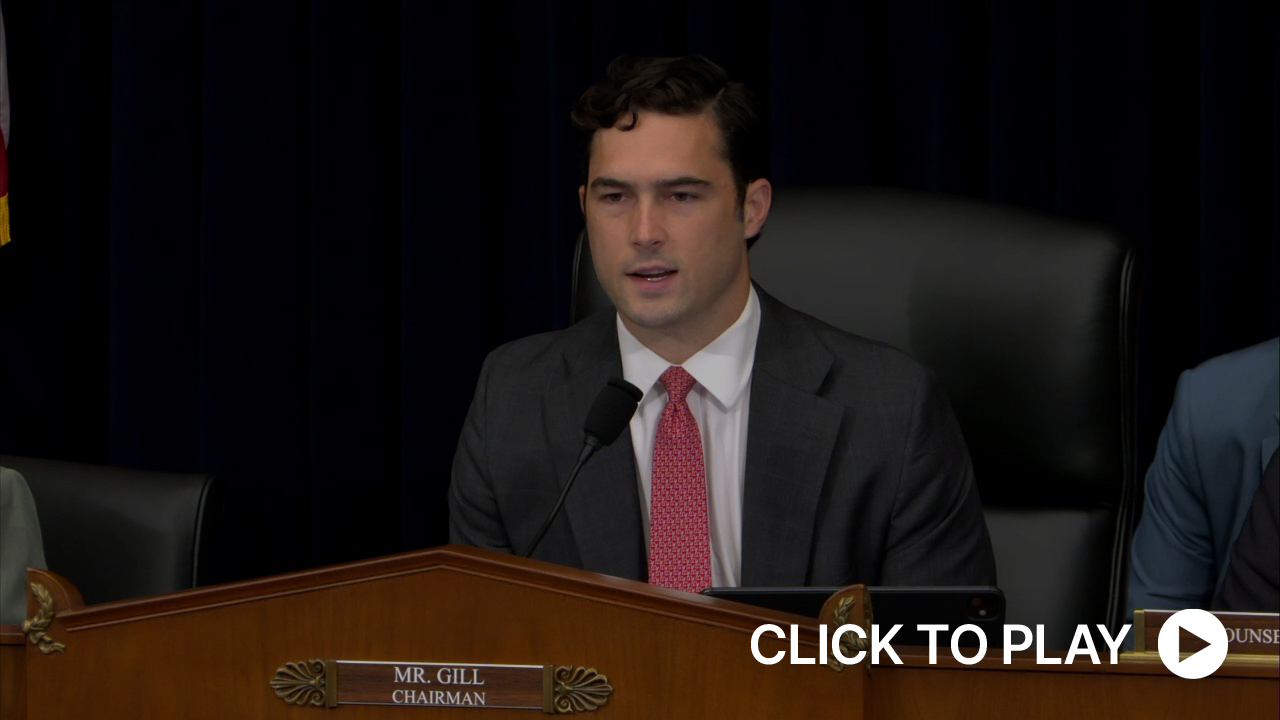
Below are Task Force Chairman Gill’s remarks as prepared for delivery:
Good morning and welcome to today’s hearing before the Task Force on Defending Constitutional Rights and Exposing Institutional Abuses on the discriminatory, harmful, and often illegal nature of so-called “Diversity, Equity and Inclusion” or “DEI” policies.
DEI is, by its very nature, an affront to the principles and ideals that define our great nation and a rejection of the progress our predecessors made in ensuring civil rights protections for all Americans.
Our forefathers fought and died to ensure that this country would be a place where every person has the opportunity to achieve great things as the fruit of his or her own talents and hard work.
Civil rights leaders of the 1950s and 1960s fought tirelessly in the pursuit of these same principles.
To ensure that Americans would “not be judged by the color of their skin but by the content of their character.”
Today DEI has become a euphemism for a Marxist ideology which seeks to undo those very efforts by civil rights leaders like Martin Luther King and his contemporaries.
DEI represents a conscious effort to specifically judge people by the color of their skin and other immutable characteristics.
Not only is this an utterly disgusting and racist ideology, but it is also a clear violation of the Constitution and federal law.
Title 7 of the Civil Rights Act of 1964 clearly prohibits unlawful employment practices that discriminate against an individual “because of such individual’s race, color, religion, sex, or national origin.”
And the Supreme Court ruled in a 2023 case that the Equal Protection Clause of the Fourteenth Amendment to the Constitution prohibits racial discrimination in college admissions practices.
Meanwhile, DEI policies embody racist and stereotypical attitudes harbored by the left toward groups that these policies purport to benefit.
Do Democrats believe that people they would categorize as “diverse” do not possess the skills to succeed in our country without quotas and preferential treatment?
Apparently, yes. We know this because the mask slips and they admit this explicitly.
New York Governor and Democrat Kathy Hochul patronizingly claimed in 2024 that, quote, “Black kids growing up in the Bronx [] don’t even know what the word computer is.”
I guess if you believe that nonsense then DEI makes more sense.
It isn’t just prominent Democrat politicians.
Some of the largest American companies bought into this absurdity.
For instance, companies such as Macy’s, BlackRock, Starbucks, Disney, Google, Amazon, among others, in recent history instituted aggressive DEI policies.
In higher education, institutions have, in open defiance of the Supreme Court, merely rebranded their racist DEI practices while continuing to seek out novel means to racially categorize and then discriminate against individuals.
To combat this, the Trump Administration has taken historic action to enforce federal civil rights law and ensure all citizens are protected from discrimination.
Despite this bold stance against discriminatory practices, I am concerned that the DEI proponents in industry and academia are just biding their time.
The behavior of the Radical Left indicates that DEI is not truly eradicated from our society, but merely lying dormant and licking its wounds until it has an opportunity to rise again.
If the Left does not abandon this obsession, where will that lead our country?
I look forward to a discussion today on how we can work toward a society that has eradicated insidious discrimination under the guise of DEI.
(House Committee on Oversight Press Release)
Key Takeaways:
DEI policies are pretexts for illegal and unconstitutional discrimination.
- Mike Gonzalez, Senior Research Fellow at the Heritage Foundation, testified that
- “The ultimate goal is to structurally transform museums into anti-racist, multiracial, multicultural institutions in a transformed society. Which brings us to the question, ‘what is DEI?’ The initials stand for things we should want. However, the intention of these words has been distorted as they now mean the opposite. ‘Diversity’ is now an ‘identity-based approach’ that violates individual character, enforces intellectual conformity, and demands quotas in order to attain community professionalism. As for ‘equity,’ it means ‘equality of outcomes,’ which is a violation of equality before the law. It sounds like equality, but it now means it’s opposite. As candidate Kamala Harris demonstrated in November 2020 when she tweeted, quote, ‘there’s a big difference between equality and equity. Equitable treatment means we all end up in the same place,’ that is not the American ideal, but it marks this promise written in sand. Inclusion, meanwhile, means exactly its opposite—exclusion.”
- “The ultimate goal is to structurally transform museums into anti-racist, multiracial, multicultural institutions in a transformed society. Which brings us to the question, ‘what is DEI?’ The initials stand for things we should want. However, the intention of these words has been distorted as they now mean the opposite. ‘Diversity’ is now an ‘identity-based approach’ that violates individual character, enforces intellectual conformity, and demands quotas in order to attain community professionalism. As for ‘equity,’ it means ‘equality of outcomes,’ which is a violation of equality before the law. It sounds like equality, but it now means it’s opposite. As candidate Kamala Harris demonstrated in November 2020 when she tweeted, quote, ‘there’s a big difference between equality and equity. Equitable treatment means we all end up in the same place,’ that is not the American ideal, but it marks this promise written in sand. Inclusion, meanwhile, means exactly its opposite—exclusion.”
- Inez Feltscher-Stepman, Senior Policy and Legal Analyst at Independent Women, testified that
- “The previous Obama Administration redefined the basic word used in the Civil Rights Act of 1964—’sex.’ Up until that point, from time immemorial, ‘sex’ had meant biological sex. And all of a sudden, under these administrations, it suddenly included gender identity, so-called as declared by the individual. That false definition was illegitimately substituted and used to transform all of anti-discrimination law in the United States without a single legislative vote.”
- “The previous Obama Administration redefined the basic word used in the Civil Rights Act of 1964—’sex.’ Up until that point, from time immemorial, ‘sex’ had meant biological sex. And all of a sudden, under these administrations, it suddenly included gender identity, so-called as declared by the individual. That false definition was illegitimately substituted and used to transform all of anti-discrimination law in the United States without a single legislative vote.”
- Title VII of the Civil Rights Act of 1964 prohibits unlawful employment practices that discriminate against an individual “because of such individual’s race, color, religion, sex, or national origin.”
Employers and universities still discriminate on the basis of race, sex, and national origin.
- Inez Feltscher-Stepman also testified that
- “First, the enforcement of anti-discrimination law in admissions and in the workplace had become hypersensitive to mere statistical disparities in outcomes and alleged microaggressions while looking the other way, as universities and companies announced and then followed up on their intention to actively discriminate in favor of preferred racial categories and against disfavored ones. Second, and related the legal doctrine of disparate impact, imagining systemic racism as a kind of god of the gaps to be assumed anytime outcomes don’t come out perfectly racially balanced, even in the face of total lack of evidence of any animus, had become baked into our legal system in a variety of ways.”
- “First, the enforcement of anti-discrimination law in admissions and in the workplace had become hypersensitive to mere statistical disparities in outcomes and alleged microaggressions while looking the other way, as universities and companies announced and then followed up on their intention to actively discriminate in favor of preferred racial categories and against disfavored ones. Second, and related the legal doctrine of disparate impact, imagining systemic racism as a kind of god of the gaps to be assumed anytime outcomes don’t come out perfectly racially balanced, even in the face of total lack of evidence of any animus, had become baked into our legal system in a variety of ways.”
- Michael Shires, Vice Chair of Education Opportunity and Higher Education at America First Policy Institute testified that
- “Today, this insidious ideology infects nearly every dimension of the academy, including hiring, promotions, tenure, admissions, and even academic publishing. Over the past four decades, I have watched this contagion metastasize on campuses. I’ve sat in university diversity committee meetings where I was personally scolded by my peers for the color of my skin. I’ve been asked to draft loyalty statements to this ideology in order to apply for jobs, and explicitly told to hire candidates because of their race or gender, and not because of their ability to do the job…The leftists who have co-opted America’s institutions tolerate only one perspective on campus, theirs undermining the very intellectual diversity needed for higher education to fulfill its primary public purpose. Unaligned speakers are canceled. Students who disagree are failed. Faculty are intimidated into silence or fired shout downs, heckler’s, vetoes, violence and even murder are used to silence dissenting voices.”
- “Today, this insidious ideology infects nearly every dimension of the academy, including hiring, promotions, tenure, admissions, and even academic publishing. Over the past four decades, I have watched this contagion metastasize on campuses. I’ve sat in university diversity committee meetings where I was personally scolded by my peers for the color of my skin. I’ve been asked to draft loyalty statements to this ideology in order to apply for jobs, and explicitly told to hire candidates because of their race or gender, and not because of their ability to do the job…The leftists who have co-opted America’s institutions tolerate only one perspective on campus, theirs undermining the very intellectual diversity needed for higher education to fulfill its primary public purpose. Unaligned speakers are canceled. Students who disagree are failed. Faculty are intimidated into silence or fired shout downs, heckler’s, vetoes, violence and even murder are used to silence dissenting voices.”
- The Supreme Court ruled in 2023 that the Equal Protection Clause of the Fourteenth Amendment to the U.S. Constitution prohibits racial discrimination in college admissions practices.
The Trump Administration is working to abolish illegal DEI policies.
- Mike Gonzalez also stated that
- “President Trump has tried to reverse this regime through executive orders that explicitly targets President Biden’s programs, directs federal agencies to eliminate DEI initiatives throughout the federal government, and calls for increased scrutiny of DEI practices in schools and universities that receive federal support. Most recently, [Office of Management and Budget] issued a new rule change that also fights DEI.”
- “President Trump has tried to reverse this regime through executive orders that explicitly targets President Biden’s programs, directs federal agencies to eliminate DEI initiatives throughout the federal government, and calls for increased scrutiny of DEI practices in schools and universities that receive federal support. Most recently, [Office of Management and Budget] issued a new rule change that also fights DEI.”
- Inez Feltscher-Stepman also stated that
- “But now we’re in 2026, more than a year and a half into the second Trump Administration. On day one, this President declared that the federal government was actually going to enforce equality under the law, regardless of whether the thumbs on the scale benefited black Americans or white Americans or anyone else. The promises of the President’s roster of day one EO’s have taken some time, and I’m sure a lot of hard legal and bureaucratic work across disparate agencies to come to fruition. But now, this ideal that it’s illegal to use characteristics like race and sex to make important decisions about people’s lives and work, is being shaped in real time…The Trump Administration is, for the first time in decades, enforcing the Civil Rights Act and the Constitution equally for all Americans.”
Member Highlights:
Task Force Chairman Brandon Gill (R-Texas) asked aboutthe presence of DEI in university admissions.
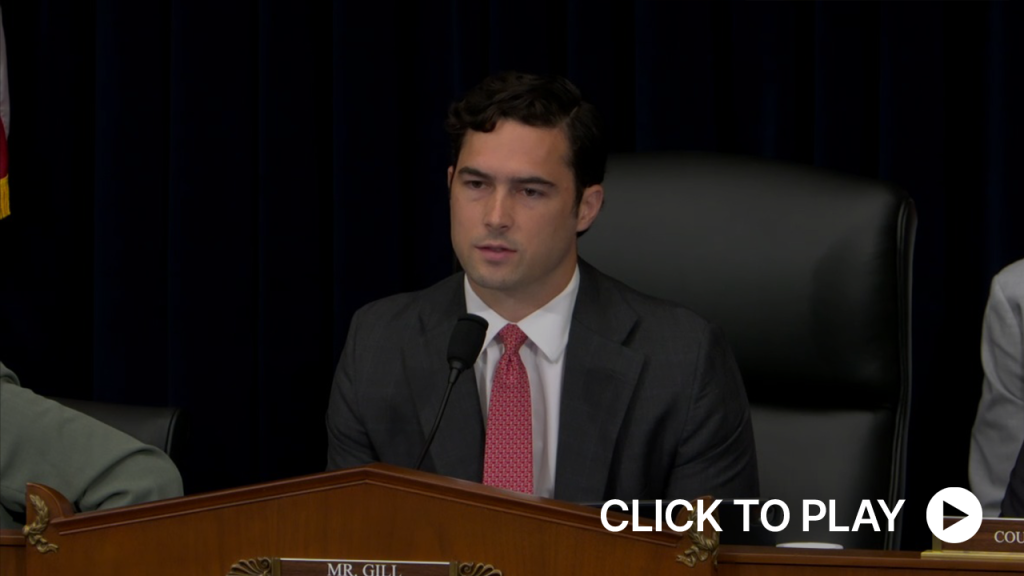
Task Force Chairman Gill: “[You] mentioned that a lot of colleges and universities, you expect, to fight DEI restrictions. Why is that? You said that there was an ideological component there.”
Ms. Feltscher-Stepman: “Right. I think my fellow witness [Dr. Shires], correctly referenced the idea of the oppressor and the oppressed. There’s this idea that all differences in culture disparities, outcomes, all of these are somehow immediately evidence of discrimination and some kind of unjust system. And so, there’s an ideological commitment to make sure that the kind of force the world to look the way that they think it ought to, and unfortunately, that’s both immoral, discriminatory, and fortunately for us, it’s illegal under the law of the United States.”
Task Force Chairman Gill: “Could you walk us through, practically speaking, what a DEI policy would mean for a college admissions process?”
Ms. Feltscher-Stepman: “It means that in practice, they place a thumb on the scale for applications that may have no more or, in fact, lesser qualifications than other applications purely on the basis of race. And by the way, we saw this in the data in Students for Fair Admissions. Harvard was discriminating against Asian and white applicants who were comparably situated to other applicants. And we know that universities have been doing this for decades.”
Rep. Byron Donalds (R-Fla.) inquired about the current state of DEI in workplaces and academia and the ways DEI is being rebranded to avoid public scrutiny.
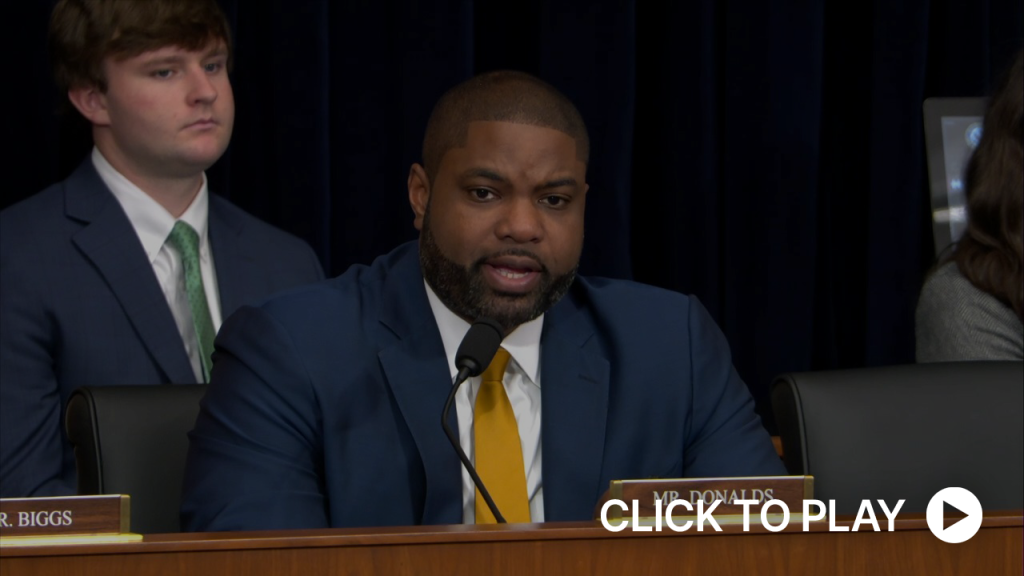
Rep. Donalds: “Dr. Shires, thank you so much for being here. I want to pick up where you left off. In your view, what is the current state of academia with respect to DEI programs? Like, what’s actually happening in there today?”
Dr. Shires: “On most campuses? DEI is still in full force. You see institutions, for example, that require diversity statements for applications have eliminated that. But yet, every single website that helps you apply for a job has information on how to circumvent not having it, to make sure that they know that you are aligned with DEI.”
Rep. Donalds: “Are we seeing the same issue in some federal agencies, even though the Trump Administration obviously has put out executive orders to unwind DEI practices and federal agencies?”
Dr. Shires: “Absolutely. It’s important to remember that the universities and the academy are kind of the epicenter for our professional workforce. And so, as students graduate and have been indoctrinated in this ideology, they carry it with them into the workplace.”
Rep. Donalds: “What in these agencies and in, even in universities, what are some of the ways that they are rebranding DEI to try to basically kind of be in the shadows away from the eyes of the American people?”
Dr. Shires: “The most common one is if you see an ‘office of community belonging,’ it’s where all the people that were in the DEI office now are on campus.”
Rep. Donalds: “Point of clarification, what is ‘community belonging?’”
Dr. Shires: “Well, it’s what they call DEI offices now. It takes the inclusion part of DEI—diversity, equity and inclusion. And it talks about how you how you empower and enable students in these protected classes, to be on campus and to be engaged. But it’s really the same operation that was there before about dividing the campus.”
Rep. Brian Jack (R-Ga.) examined the history of DEI and where the initial idea to implement these policies originated.
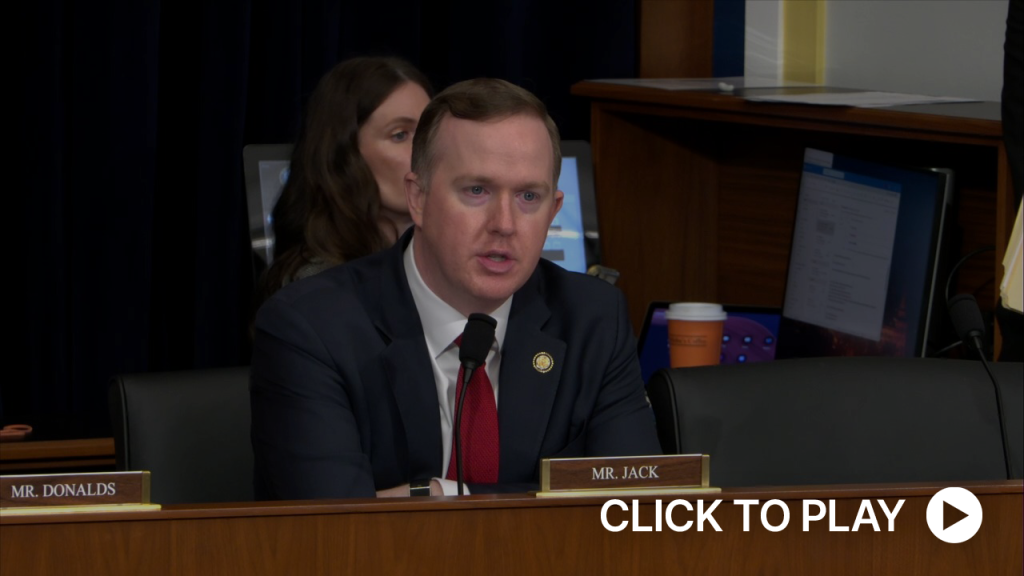
Rep. Jack: “Mr. Gonzalez, I’d like to start with you. I’d like to learn a little bit more about the history of DEI and some of the initiatives we’ve seen in the corporate workplace. Could you help us understand what from where this emanated and who developed these initial ideas to implement these policies?”
Mr. Gonzalez: “Representative Jack, thank you for your question. So, they have been around for many years. Initially they were a response to the Civil Rights Act. They wanted, you know, throughout the 60s, 70s and 80s, they wanted to make sure that companies were doing the things that the government demanded first of contractors, government contractors, then of just any business. Very quickly these degenerated into practices and trainings that were part of a larger framework that saw America as being basically racist, and that’s when, especially since in the last 15 years, the acronym has become more defined. They began to look a lot more like the struggle sessions as practiced in the cultural revolution in China, which were meant to change the thinking of a whole society.”
Rep. Jack: “And I’m just curious, over those past 15 years, I mean, what’s really precipitated the acceleration of this? It seems like it’s commonplace now and something that we’re trying to identify. We’re having a congressional hearing on it today. Is there funding that’s going toward this? Are there groups that are trying to sow division and discord vis-a-vis this initiative?”
Mr. Gonzalez: “Yeah, you can see a lot of studies have been made on the use [of it] by newspapers and the academy of the terms of the whiteness, systemic racism, etcetera. And they begin to really spike in 2014, and I have associated that with the beginning of the Black Lives Matter movement in 2013, the second in June of 2013, and then the Ferguson riots in 2014, when we really began to the country began to change enormously. And that obviously culminated in 2020, which is when really all, you know, diversity trainers were brought here to Congress. Robin D’Angelo met with members of one party, nearly all of the members of one party, and gave a training session. So you had two spikes, 2014, and then a huge spike in 2020.”
Click here to watch the hearing.





Leave a Comment