

By Jay Rogers
On May 7, Secretary of War Pete Hegseth released a video that made me laugh out loud in the best way possible. He introduced “Deal Team Six,” a cadre of private-sector negotiators embedded inside the Pentagon’s newly formed Economic Defense Unit.
Thanks to President Trump’s $1.5 trillion defense budget, this War Department has moved from bureaucracy to business.
This is a FISCALLY RESPONSIBLE INVESTMENT in our Arsenal of Freedom—ensuring our military remains the most lethal fighting force in the world. pic.twitter.com/ykIfMw3kuU
— Secretary of War Pete Hegseth (@SecWar) May 7, 2026
Their mandate is direct: end decades of cost overruns and delivery failures by requiring contractors to fund their own factory expansions. In return, the Pentagon offers steady, long-term orders at fixed prices. Refuse the terms and you get replaced.
Hegseth summed it up the way a good operator always does:
“We’re not tolerating delays in production or cost overruns anymore. We’ve pushed out the bureaucrats who’ve made these deals in the past and replaced them with the most talented negotiators in the private sector.”
Thirty years on Wall Street gives you a finely tuned ear for this kind of language. This is how serious capital allocators talk.
For five decades, the Defense Department operated as a passive checkbook, rewarding contractors who charged once to build the factory and again for every unit that came off the line.
The Government Accountability Office documented the pattern in a September 2025 report: the F-35 program continues to over-promise and under-deliver, plagued by routine cost growth and production shortfalls. The USS Gerald R. Ford, lead ship of its class, burned through more than $13 billion, far beyond its initial projections, while key technologies suffered years of delay.
Taxpayers absorbed every dollar. I watched the same dynamic up close when analyzing distressed business structures. You reward performance or you get more excuses. Hegseth just fired the excuses.
The Economic Defense Unit, led by George Kollitides, former head of defense at Cerberus Capital Management, is not another blue-ribbon panel generating reports. According to a Semafor investigation, the Pentagon is specifically targeting Goldman Sachs, Morgan Stanley, JPMorgan, and Bank of America for a 30-person team tasked with deploying up to $200 billion over three years into companies critical to national security.
Congress backed the effort with more than $266 million in the fiscal year 2026 National Defense Authorization Act. President Trump’s fiscal-year 2027 defense budget adds another $593 million while pushing the overall topline to $1.5 trillion.
Operators are replacing bureaucrats. Long overdue.
I coached youth football and rugby for years and the best teams I ever fielded ran on identical principles: clear standards, personal accountability, and zero tolerance for missed assignments.
One player slacks off in practice; the whole squad suffers on game day. The Pentagon’s old contracting system did the opposite, it penalized the taxpayer for the contractor’s failures, then handed out renewals anyway.
Hegseth is inverting that equation. He is also walking the walk on culture.
Combat veterans and enlisted troops I have spoken with consistently praise his insistence on physical standards and lethality. The prior administration left the services demoralized after the Afghanistan withdrawal and years of DEI mandates that had nothing to do with destroying an enemy.
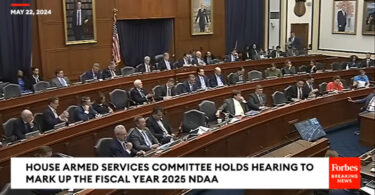
According to Hegseth’s testimony before the House Armed Services Committee on April 29, 2026, the military is now seeing a 30-year record in recruiting and is turning away qualified candidates purely for lack of funding. The Pentagon confirmed that in FY2025 every active-duty branch exceeded its recruiting goal, with the Army hitting 101.7% and the Navy hitting 108.6% of their targets. The troops know who runs with them and who hides behind a desk.
Career officers grumble about Hegseth’s style. Bureaucrats are upset. Expected. Style draws headlines; results don’t. The real scorecard is whether Deal Team Six delivers weapons on time and on budget.
Early indicators look promising. Companies that execute get predictable, long-term revenue streams — the kind that justify capital investment without a government subsidy as the backstop. Companies that miss get shown the door. That is the same discipline I apply running my firm: reward execution, penalize delay. The American taxpayer deserves nothing less from the people spending their money.
Critics label this “Wall Street taking over the Pentagon.” Wrong. The real scandal was the prior arrangement, treating the Defense Department like an ATM with no PIN and no audit trail.
The Pentagon has failed its annual financial audit every year since the law first required one in 1990. Hegseth has publicly stated his intention to be the first Secretary in history to deliver a clean audit before his term ends. That ambition alone sets him apart from 35 years of predecessors.
This is not charity. This is fiduciary discipline, the exact standard every pension fund and family office applies to its investment managers on a daily basis. If thirty investment bankers can wring better terms from Fortune 500 CFOs, they can certainly wring better terms from defense suppliers whose entire business model runs on the American taxpayer.
This is peace through strength applied to finance. A leaner, accountable defense enterprise redirects resources toward actual combat power instead of overhead and consultants. It sends a clear signal to adversaries — China in particular — that America is done subsidizing inefficiency while Beijing races ahead in hyper sonics, artificial intelligence, and drone technology.
More than that, it restores something rarer than a clean Pentagon audit: the public confidence that defense dollars buy fighting capability rather than contractor margins.
Deal Team Six will not fix every problem overnight. Entrenched interests never surrender without a fight, and the defense-industrial complex has had decades to perfect protecting the status quo.
But for the first time in my adult life, the Pentagon is being run like a business instead of a jobs program for politically connected consultants.
As the father of a West Point graduate, I will take one competent operator over a hundred credentialed talkers every single day of the week. The troops already know who is on their side.
The American taxpayer has waited long enough. The offer is on the table. Now let’s watch who takes it.
_
Jay Rogers is President of Alpha Strategies and a financial professional with more than 30 years of experience in private equity, private credit, hedge funds, and wealth management. He has a BS from Northeastern University and has completed postgraduate studies at UCLA, UPENN, and Harvard. He writes about issues in finance, constitutional law, national security, human nature, and public policy.





Leave a Comment