
By Michael Nevradakis, Ph.D. | CHD
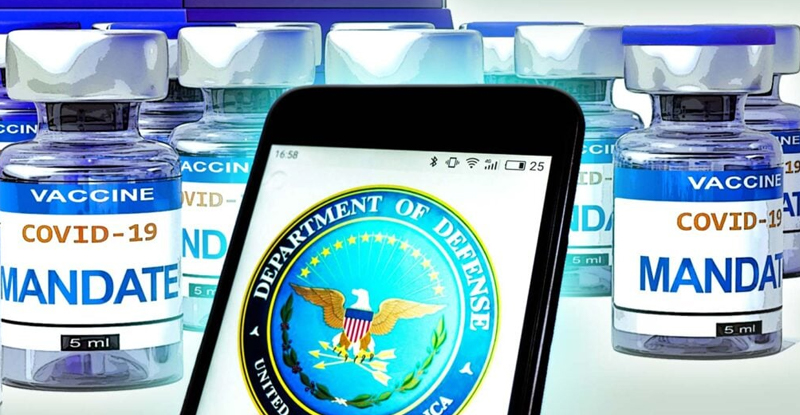
The U.S. Department of Defense (DOD) is launching two task forces to review the military’s COVID-19 vaccine mandate during the pandemic, Anthony Tata, Under Secretary of War for Personnel and Readiness, announced last week on X.
“These task forces will examine the development, implementation & outcomes of the policy,” Tata wrote.
According to a December 2022 DOD document, 8,123 service members were discharged as of Nov. 30, 2022, for COVID-19 vaccine refusal.
In a video accompanying his post, Tata said, “These task forces will include members of the affected community, and they will be focused on making sure that this never, ever happens again to our servicemen and women in uniform, their families or department civilians.”
UPDATE: @DeptofWar is establishing 2 task forces to review the COVID-19 vaccine mandate. These task forces will examine the development, implementation & outcomes of the policy. We’re including members of the affected community. The purpose is to ensure it never happens again. pic.twitter.com/gWSgdLcpCU
— Under Secretary of War Anthony J. Tata (@USW_PR_HONTata) November 5, 2025
Robby Soave, co-host of The Hill’s “Rising,” the first media outlet to report the story, said:
“I am glad for this policy of bringing back the people who resigned over the vaccine mandate. As it turned out, the COVID vaccine is mostly a personal health decision. … There isn’t enough of a public health justification, in my view, to say you should have to get it to be part of government service or part of military service.”
Attorney Dale Saran, who represents service members challenging the military’s mandate in court, said, “I believe that in the coming weeks and months, we’ll begin the process of unwinding the mess that the Biden administration made of the armed forces over its illegal COVID-19 mandates.”
Reinstatement process has ‘not been a model of efficiency’
In August 2021, then-Defense Secretary Lloyd Austin mandated the COVID-19 vaccine for all U.S. military members.
A year later, Congress passed the 2023 National Defense Authorization Act, which required Austin to rescind the mandate. He officially lifted the mandate in January 2023.
In January of this year, President Donald Trump issued a presidential action directing the DOD to reinstate all previously discharged members, restoring their former rank, full back pay and benefits.
Following Trump’s executive order, the Army, Navy, Air Force and Marines implemented procedures to reinstate discharged service members. In April, U.S. Defense Secretary Pete Hegseth signed a memorandum that further clarified those procedures.
However, the DOD did not offer back pay to service members previously discharged for being unvaccinated, and it kept disciplinary actions related to their vaccine refusal on their records.
As a result, by April, the military had reinstated only 43 of the more than 8,000 discharged service members.
Saran said some of his clients have told him that the reinstatement process has “not been a model of efficiency.”
On Oct. 3, Tata wrote on X that “many” former military service members had been “impacted by the unlawful COVID vaccine mandate” and promised that he would act to bring them back into service.
“We know the reinstatement process isn’t perfect. We’re going to keep working hard to make it faster & easier,” Tata wrote.
Days later, the Pentagon directed military service leaders to provide “white glove” treatment for previously discharged service members seeking to reenlist. The order followed a memo from Tata instructing leaders to make changes at Military Entrance Processing Stations, where recruits undergo examinations before entering active service.
DOD working to resolve ‘last mile’ issues in reinstatement process
On Oct. 29, Tata said “many impacted warriors” had reached out to him “with COVID reinstatement questions & concerns” and that his office was “engaging with the Services daily to follow up & close the ‘last mile.’”
In another X post last month, he acknowledged that service members seeking reinstatement were still facing “several ‘last mile’ issues in the COVID reinstatement process.”
“At this stage, any delays are unacceptable,” Tata wrote.
According to Saran, “Last mile concerns really get down to the stubby pencil work of just how complete — how fulsome — the relief will be.”
He said the government can offset a service member’s civilian earnings against the back pay owed for the period the person was discharged. That could leave some service members with “a zero-dollar claim against the government.”
Saran added:
“So, there are a lot of kinks in the hose like that, and we’ll have to see whether the government sticks to business as usual and tries to minimize the dollars it recompenses, or if it’s really going to try to do ‘Justice,’ with a capital ‘J’ for these folks, even and especially the ones who can no longer help them by returning to service.”
In September, Stuart Scheller, senior adviser in the Office of the Under Secretary of War for Personnel and Readiness, wrote on LinkedIn that Tata had directed service chiefs “to minimize reinstatement friction points.”
Tata and Scheller conducted listening sessions on obstacles former service members were facing in relation to their reinstatement.
“Every service member who in some form expressed interest to go through the COVID board process recently received a follow up from the respective service. This effort has almost doubled the number of packages moving towards the boards,” Scheller wrote.
Saran said previously discharged service members have faced challenges that extend beyond the reinstatement process. He said:
“Imagine the challenges you would face if you got fired from your job tomorrow, on four hours of notice. Now multiply that by about 100,000 military servicemembers across all service branches and components.
“We saw cadets frog-marched out of the service academies who had nowhere to go — i.e., were rendered homeless. We had a female Marine who was pregnant, shipped home from Okinawa with nothing but the clothes on her back at 32 weeks of pregnancy, kicked out of the Marine Corps by week 36, and four weeks later, she had a baby. How’s that for ‘Semper Fidelis’?”
Legal challenges opposing the mandate continue
In July 2022, just after the military’s deadline for compliance with the COVID-19 vaccine mandate expired, the U.S. Army cut 60,000 unvaccinated guard and reserve soldiers, preventing them from participating in training or receiving military benefits.
Saran said:
“The vaccine mandate cratered military recruiting. Since the rescission, we’ve seen reports that suggest recruitment is now really coming back in light of what the President and the Secretary of War are doing. That’s unquestionably a good thing for U.S. national security.”
In some cases, service members who refused to comply with the mandate faced disciplinary actions, including court-martial.
The actions sparked several legal challenges, including a recently reinstated federal lawsuit filed by service members whose requests for religious exemptions from the COVID-19 vaccine were denied.
Saran said he continues to represent clients who were discharged and who later sued the military. He said:
“In two of our cases, government counsel asked for a voluntary remand to the individual service Correction Boards in light of President Trump’s executive order. Six of our Army-named Plaintiffs have received very favorable decisions and then the shutdown happened, so we’re picking back up.
“The Board for Correction of Naval Records has taken the contrary view. The Air Force is also playing games with regard to Air National Guard folks. We’re hopeful that we’ll get that corrected by our judge and get this sled moving in 2026.”
In August, the U.S. Army ended its COVID-19 vaccine requirement for childcare and youth program staff.
However, other military vaccine mandates remain in place. In September, the Pentagon revised its annual flu shot mandate, exempting reservists but keeping the requirement for active-duty troops.
“DOD never, ever admits it was wrong. And there are still extant Pharma contracts with DOD that must be fulfilled,” Saran said. He added that he is “very optimistic about the coming year.”
“We genuinely believe that we’re going to find common ground with the Trump administration,” Saran said.
First published on Children’s Health Defense



Leave a Comment