By Cynical Publius (on X @CynicalPublius), ret US Army Colonel
If you are someone who is at all interested in modern conservative thought, by now you are probably familiar with Helen Andrews’ astonishingly powerful article in the October 16, 2025, edition of Compact Magazine entitled “The Great Feminization.” (She also provided an equally powerful speech on the same subject at this year’s National Conservatism conference; the link is here.)
I strongly recommend you take the time to read her article and listen to her talk, but in a nutshell, she suggests that what most of us view as the takeover of “woke” in Western society is in fact a rise to power of traditionally feminine methods of decision-making, thinking, and leadership.
However, as powerful and thought-provoking as her analyses are, she left out one tremendously important segment of American society: the United States military.
As a retired U.S. Army colonel, I believe I have some important thoughts to add to Andrews’ analysis.
I think in this context that it is important that I first establish my bona fides, as I do not share Andrews’ luxury of being a woman critiquing female ways of thinking.
My Army career was in logistics, which means from my very first moment as a second lieutenant until I retired as a colonel, I served in units with women. So many of the women I served with were incredibly competent, brave, and able to perform with excellence under enemy fire. Even more, there are plenty of brave women buried in Arlington National Cemetery.
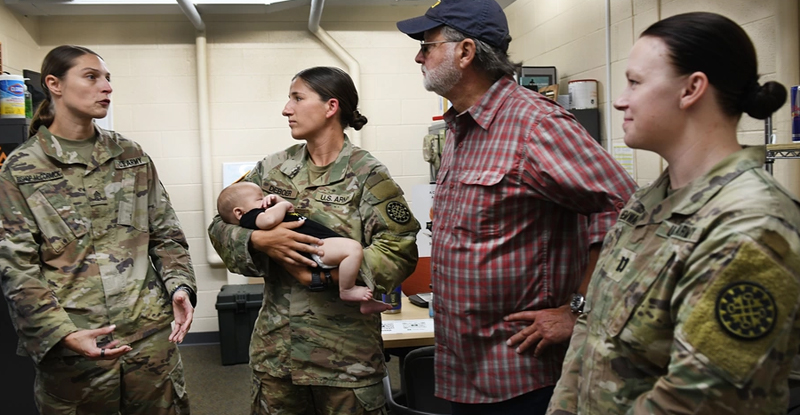
Despite my positive experiences serving with, leading, and being led by female soldiers, I have long decried what I consider a non-combat-effective trend, or what I call the “Mommyfication” of the U.S. military.
Just like Andrews properly identified that men and women tend to have different approaches to problem solving, I believe it is fair to say that men and women tend to have fundamentally different approaches to military leadership.
In the fast-paced, violent world of military decision-making, male leaders tend to be more quickly decisive in solving tough problems and are little concerned about the emotional components of their decisions.
Meanwhile, female leaders tend to be far more collaborative with decision-making and tend to factor in the emotions of all around them when making a decision. (Importantly, as Andrews mentions in her original article, there are always exceptions to generalizations, but most generalizations tend to have a basis in actual fact.)
I am not condemning collaborative decision-making per se. In fact, collaborative decision-making DOES have a place in the military to an important extent. Good military leaders solicit the advice of trusted subordinates and colleagues, but good military leaders also act quickly when decisive action is needed.
While good military leaders will consider the ideas of others, at the end of the day, they will (when needed) act boldly without regard for the disagreement or emotions of those subordinates who want to do things differently.
(Think of that scene in the movie Patton where General Patton disregarded the emotion-laden advice of Generals Omar Bradley and Lucian Truscott to delay an amphibious assault in the Sicily campaign—that is what I characterize as a male way of military decision-making.)
Could a female general have made the same bold decision in the face of such emotional disagreement from her subordinates? In most cases, the answer is “No.” Yet General Patton was ultimately correct in his decision-making since a rapid, violent end to that campaign saved countless American lives.
Decisive leadership is good military leadership.
Fully and totally collaborative leadership is bad military leadership.
Now, be honest: who tends to act more decisively and less collaboratively as leaders, men or women?
Be honest.
The other problem I have encountered with female military leaders is the tendency to, consciously, subconsciously, or unconsciously, treat their subordinates at some level like they are their children.
A military commander is not a mommy. A military commander must be able to order his or her subordinates to go fight to probable death. If you view your troops as your children, can you do this?
Who is more likely to send their children off to die, a man or a woman? Again, answer honestly.
I saw this particular phenomenon time and time again in my service.
Whether it was a female company commander constantly baking cookies for the soldiers she might need to send off to death or a battalion executive officer defending a female medic who broke down in tears when she was handed her basic load of ammunition upon arriving in Afghanistan, female military leaders tend to view their subordinates in an entirely different manner than male leaders.
Just as fathers and mothers treat their children differently in times of stress, so do male and female military officers and NCOs view their subordinates differently in war.
The conundrum here is that there are plenty of excellent female soldiers. When I was a battalion commander, I had a female XO and a female S-3, and they were both superb in combat. (I commanded a logistics unit and not a combat arms unit, which is an important distinction I’ll come back to later.)
If so many female soldiers can perform at the individual level with excellence in combat, where lies the problem?
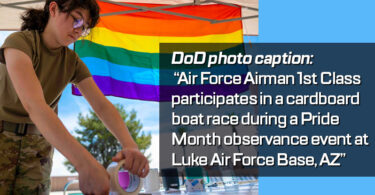
In my opinion, the real problem is that under Obama and Biden, DEI policies were brought into combat arms units, and women were given combat arms commands at all levels, up to and including infantry divisions and four-star combatant commands.
To understand the true impact of the emergence of gender-focused DEI policies in combat military formations during the Obama/Biden era, one must look to what else happened at the precise same time.
Consider the coincidental timing. At the same time that Obama/Biden leadership was placing women in Special Forces units and promoting them to four-star-level combatant commands and service chief positions, the U.S. military
- became wildly risk averse,
- became stultified via consensus-building delays in war planning and acquisition processes,
- suffered through a proliferation of untimely and poorly conceived execution decisions that always sought the “perfect solution” so all involved could emotionally agree, and
- created wartime rules of engagement that literally rejected necessary violence against our enemies.
Individual standards suffered as well, as we fielded obese and out-of-shape troops because no one wanted to hurt their feelings by telling them they were substandard (a male Fort Hood command sergeant major even got suspended in disgrace for openly challenging the substandard physical standards of one of his subordinates).
Worst of all, individual training at the entry level became so feminized that drill sergeants began to fear for their careers if they induced extreme training stress, even though one of the main purposes of initial entry training is to induce physical and mental stress to prepare troops for the real stress of war. (After all, we have to prioritize the sensitive feelings of Private Snuffy when he/she is in basic training!)
These abysmal cultural changes happened at the EXACT SAME TIME as aggressive DEI policies were radically transforming the gender composition of combat units and feminizing the decision-making processes at all levels of command.
Coincidence?
No. Cause and effect.
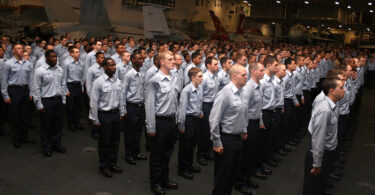
The US military has become feminized, and this is a leading cause for our numerous battlefield failures over the past fifteen years.
Now I know I’m going to get heat for this article, but hear me out.
I believe that while men and women are fundamentally different in their thought processes, they are of completely equal value. It’s just that the value needs to be applied properly.
Just as I believe almost all women will make terrible infantry division commanders, I believe Norman Schwarzkopf would have made a terrible kindergarten teacher. Guess what? Kindergarten teachers and army generals are of equal importance to society.
How about we staff those positions with the people best suited to do the job?
So how do we fix this? I believe the answer lies in Pete Hegseth’s admonition to senior military leaders to return to the best standards of 1991.
Despite the grotesque mistreatment of female naval aviators in the Tailhook scandal, 1991 represented the last year in which America’s military decisively won a war, and we did it through urgent planning and bold, decisive tactics, and we did it all in the face of expected massive casualties.
Like Hegseth, I think that we had a proper equilibrium for force composition and decision-making back in the 1990s. We had a military where combat arms was the exclusive domain of aggressive male killers, and women were staffing combat support and combat service support positions.
Heck, we even had a four-star female logistics general back then in Ann Dunwoody, so it’s not like women were denied opportunity. That system worked pretty well.
We were not risk-averse; we possessed decisive senior leadership in the combat arms, and the warfighter ethos permeated our entire force.
Importantly, at the same time, women had superb opportunities for advancement and meaningful service while not degrading effective combat decision-making.
Moreover, roles in logistics and health care (the same arenas in which I served as a MALE officer) have a strong tradition of female military leadership, whether it was a forward logistics Revolutionary War heroine like Molly Pitcher or heroic female nurses serving in every conflict since the American Civil War.
So let’s get back to that 1990s military.
Let’s restore the American tradition of quickly, decisively, and effectively defeating our enemies with ruthless efficiency.
Let’s restore stressful training.
Let’s take emotion and “making everybody happy” out of the military planning calculus.
Before I finish this article, let me repeat an important theme from the Andrews’ article that inspired my article. Men and women are fundamentally different, physically and mentally.
The great failure of the modern feminist movement is its unwillingness to accept this absolute reality.
But while men and women are different, they are of EQUAL VALUE. Western society once recognized this, and we need to get back to that realization.
I am not calling for a return of the sexually abusive “Gauntlet” of Tailhook days or sexual assault in the barracks or on the battlefield.
What I AM calling for is a military where men and women perform duties for which they are best suited.
Helen Andrews is correct. “The Great Feminization” signals that we have lost our way as a society.
Let’s de-feminize warfighting before our society is destroyed via warfighting ineptitude.
Let’s win wars again.
_
Cynical Publius is the nom de plume of a retired U.S. Army colonel and veteran of Iraq and Afghanistan, who became a practicing corporate law attorney after military retirement. You can follow Cynical Publius on X at @CynicalPublius.
First published on American Greatness
The Women in Army Special Forces Report reads like a soap opera
Need to be able to have a conversation about women in the infantry
Hegseth Is Right — We Need To Rethink Women’s Role In The Military
Ukraine’s War Highlights Again That Men And Women Are Different, And We Need Them That Way