

By George Mayforth, VMI ’82
My recent visit to the Institute during Parents Weekend—an occasion traditionally marked by pride in the Corps and confidence in the VMI system—left me with observations that must be addressed openly and honestly. These concerns do not arise from distant rumor or nostalgia; they come directly from what I witnessed on Post.
And while the current administration has begun tightening standards, the conditions I observed demonstrate that the Institute faces deeper cultural issues that cannot be ignored.
The issues I witnessed suggest that much more must be done—and done with urgency—if VMI is to remain true to its mission and its standards.
Physical Fitness and Military Bearing: A Visible Decline
The most visible and immediate concern was the overall lack of athletic conditioning across the Corps—an issue not limited to the Rat Line but evident at every class level. This is not simply about cosmetic appearance; physical readiness is a foundational pillar of a military college and central to the development of citizen-soldiers.
I witnessed cadets and saw photos of cadets—not one or two, but several—who were dozens, and in at least one case appeared to be hundreds of pounds overweight, wearing uniforms that strained at the seams or failed entirely to present a military appearance.
Such conditions would have been unthinkable in earlier generations of the Corps, not because of aesthetics, but because physical fitness and discipline are core components of VMI’s mission to produce citizen-soldiers.
Compounding this problem is the example being set by certain faculty and staff. I’ve viewed online videos and social media posts of professional staff representing the Institute in public wearing uniforms that were ill-fitted, improperly maintained, or inconsistent with basic standards of military appearance.
VMI Community (not the author) submitted and social media posts submitted to STARRS with this article:
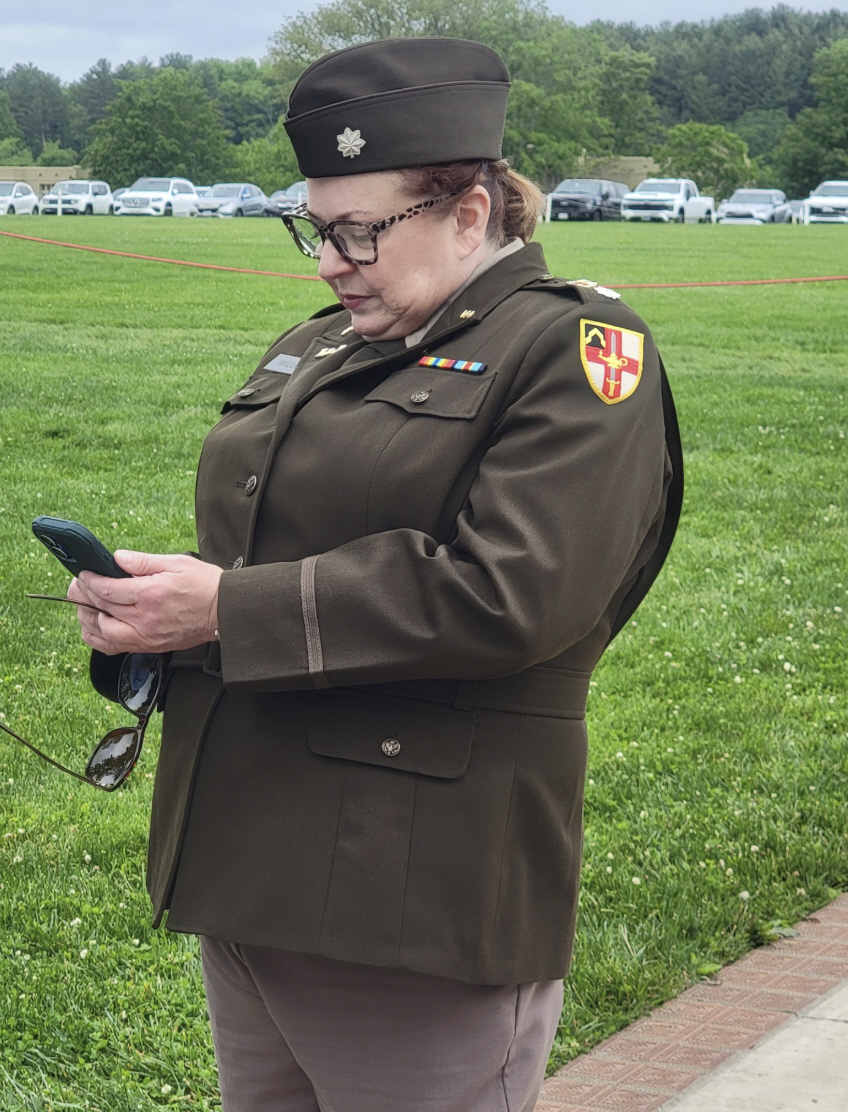
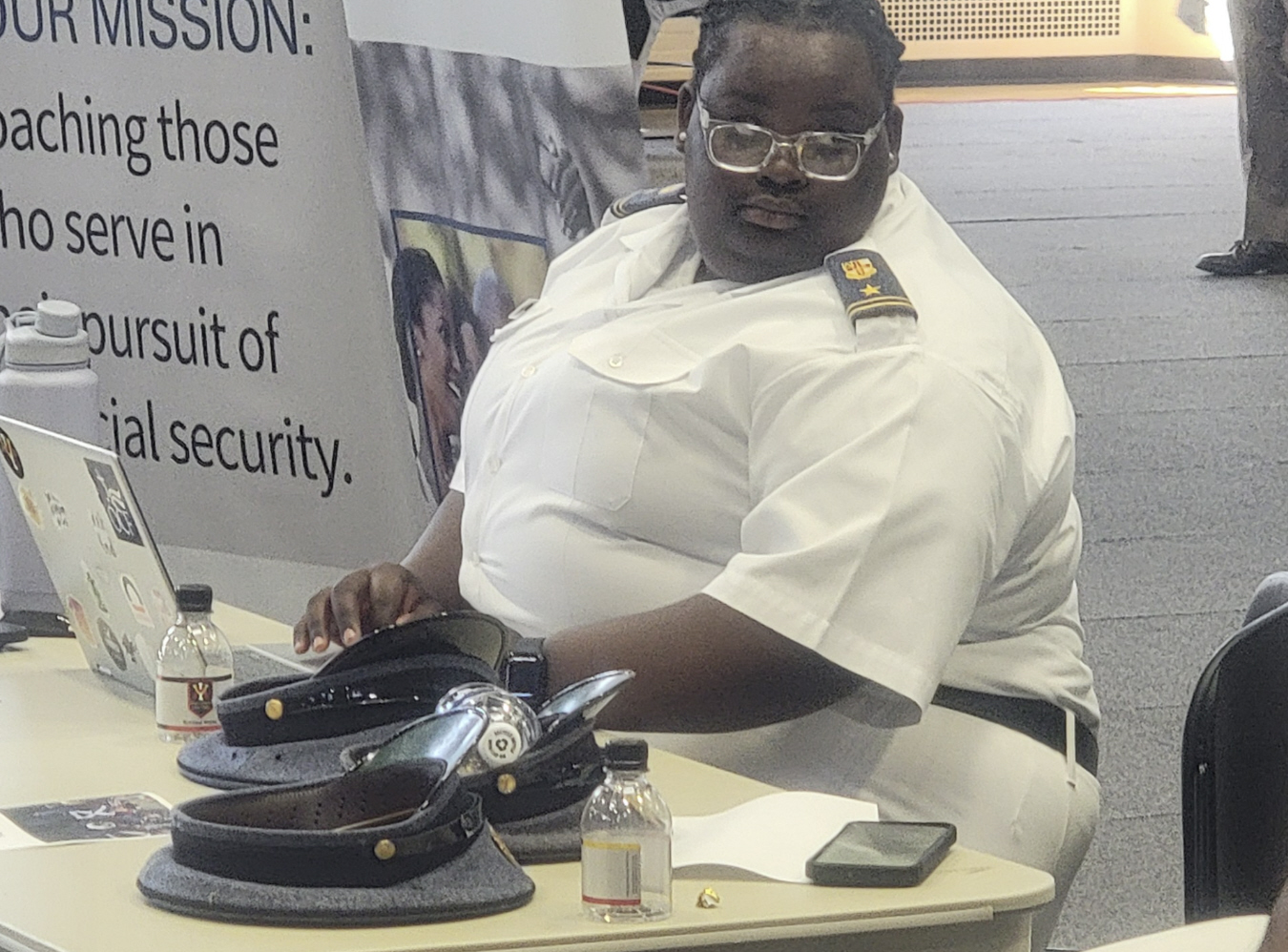
In one highly visible case, the senior communications official—whose role is to represent VMI to the public—appeared in a uniform so poorly tailored, unprofessional, and ‘bursting at the seams” that it drew attention for all the wrong reasons.
When those responsible for shaping cadets do not model the standards they enforce, the result is predictable: the Corps follows the example they see.
While I understand that new standards have reportedly been implemented to tighten regulations and hold cadets accountable, the question remains: How did we allow the culture to slip so far in the first place?
Many of the same faculty, staff, and professional mentors responsible for enforcing standards under the previous administration remain in place today. When those charged with developing cadets do not themselves model discipline, fitness, and professionalism, the message to the Corps becomes clear—do as I say, not as I do.
The results were unmistakable: sloppily worn uniforms, inconsistent grooming, and a parade formation that lacked the sharpness traditionally associated with VMI.
This is particularly troubling given that cadets collectively pay, according to the VMI website I reviewed, $2,758 a year to rent (not own) their uniforms, plus additional costs for laundry and pressing. That’s $11,032 over a cadetship just to “rent” uniforms.
I also understand from reliable cadets that the Grey Blouse is no longer worn to Supper Roll Call (SRC). Transparency and accountability in these financial decisions should be expected—not avoided.
A walk to the Parapet and reflection upon the words “Fair Specimens of Citizen-Soldiers” should remind us of the Institute’s historic expectations.
Standards cannot be selective, and they cannot be optional. They must apply to the Corps and to the adults entrusted with shaping it.
Uniform Quality and Accountability
The decline in military bearing was reinforced by uniform issues seen across the Corps during the Saturday parade. Cadets wore uniforms that were improperly fitted, sagging, wrinkled, or incomplete. One would expect uniforms to be in the best shape and tailored for this cost, and raises the question of what cadets are really paying for.
If the Institute is collecting these fees, parents, alumni, and cadets deserve transparency regarding how these funds are actually being used. These point to serious organizational contracting and management issues that must be addressed. A clear, line-item audit would be an important step toward rebuilding trust.
Declining Engagement and Spirit: A System Failing in Both Ways
Another deeply concerning observation was the disengagement of the Rat Class during the football game. Where previous generations stood, cheered, and drove the spirit of the Corps forward, this year’s Rats appeared indifferent—even bored.
At the football game, I observed a Rat Class largely disengaged—some sitting, some distracted, some simply uninterested. This stands in stark contrast to earlier eras, when Rats stood for the full game, cheered with intensity, and took pride in representing the Corps.
To be fair, this is a two-way street. When some athletic teams, particularly football and basketball, that have the highest budgets according to the VMI website, appear disconnected from the Corps, and when certain programs recruit individuals for Division I competition rather than the VMI experience, cohesion suffers.
The standards of discipline, unity, and mutual responsibility must apply equally—whether on the Hill or on the athletic field. If cohesion is the goal, then all cadets—athletes or not—must be cadets first.
Ordinary College Behaviors Taking Root
I was equally struck by the constant stream of food-delivery services entering Post, a convenience more suited to a typical college campus than to a military academy that champions the slogan “Don’t Do Ordinary.”
A Pivotal Moment for VMI’s Future
The Superintendent has emphasized accountability, stewardship, and a return to long-standing standards. These goals are vital. But they cannot be achieved if:
- Faculty and staff fail to model disciplined behavior.
- Cadets are not held uniformly accountable.
- Financial transparency remains opaque.
- Cultural expectations are weakened by fear of being labeled “body shaming” or “too strict.”
At the same time, student activity fees are funding clubs and initiatives whose transparency and alignment with Institute values deserve scrutiny.
According to VMI’s website, for the Academic Year 2025-2026, VMI charges all cadets a comprehensive auxiliary fee totaling $7,398, with a $2,602 portion of this fee allocated for cadet facilities/activities.
Of that, cadet organizations (Clubs) receive a total of $487,000 and represents approximately $324 of the auxiliary fee paid by cadets based on a budgeted yearly average student enrollment of 1,503 cadets.
One wonders why VMI does not publish where exactly the remaining $3,423, 806 goes.
Why are the high cadet activities fees being used to pay for ideological activities supporting one viewpoint while violating viewpoint neutrality in cancelling others?
For example, one sanctioned VMI activity posted on VMI’s sanctioned social media was “Intersectionality,” that is, by definition, “a framework recognizing that social identities like race, gender, class, sexuality, and ability don’t exist separately but overlap, creating unique, compounded experiences of discrimination, privilege, and oppression.”
VMI Community (not the author) submitted social media posts submitted to STARRS with this article:
https://www.instagram.com/vmi_promajiclub/
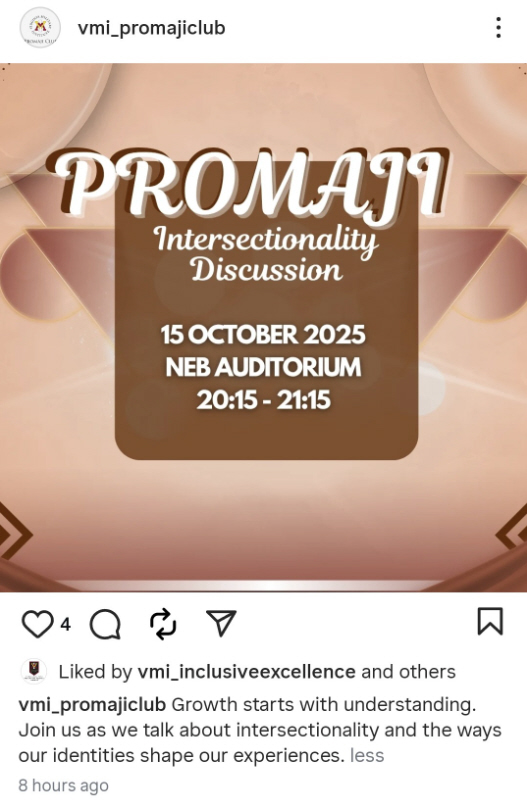

Everyone has the right to free speech. Parents, alumni, and cadets should not be expected to subsidize organizations that do not reinforce the Institute’s core mission, while other historically important clubs have been shuttered.
Yet VMI cancelled The Cadet Living History Society & Civil War Roundtable, a cadet club to explore VMI’s history mentored by the Institute’s own highly regarded historian, because of its alleged links to “the lost cause,” according to articles published in The Cadet.
What I witnessed on Post and learned through my own research is not a matter of perception. It is not exaggerated. It is what I saw or read with my own eyes. And it aligns with what numerous cadets, parents, and alumni have been quietly concerned about for years.
The new Superintendent has spoken publicly about stewardship, accountability, and the need to rebuild standards. These are encouraging words—but they must be matched by decisive action, clear expectations, and a willingness to confront uncomfortable truths.
With outside political pressures threatening to push the Institute back toward ideological experiments that undermined discipline in the first place, this is not the time for complacency.
If anything, the Corps, the alumni, and parents must re-engage now—not with blind nostalgia, but with determination to restore the Institute’s proven system of producing honorable, capable leaders.
VMI’s challenges will not be solved by slogans, social media campaigns, or assurances that concerns are “not backed up by facts.”
What I witnessed on the ground was real, it was systemic, and it was not isolated.
But the path forward remains clear: standards must be enforced consistently; faculty and staff must model the expectations they set; and the Corps must reclaim the pride and discipline that have long defined the VMI experience.
In short, we must stop doing ordinary—in every sense—and return to doing what VMI has always done best.
With political pressures and administrative philosophies potentially shifting once again at the state level after the recent election, this is not the time for regression.
Parents, alumni, and the Corps must reassert their commitment to the system that made VMI respected for 186 years. Progress is possible—but only if we stop pretending these problems are isolated or imaginary.
We cannot demand excellence from cadets while accepting mediocrity from those charged with leading them.
Respectfully,
George Mayforth
VMI Class of 1982
First published in The Cadet Newspaper without the photos and graphics.
All photos and graphics provided by a VMI grad (not the author) when the article was submitted to STARRS.






Leave a Comment