

STARRS received a email news alert that Elon Musk’s Grokipedia had made a page entry on our new STARRS Chairman, Maj. General Bentley Rayburn, USAF ret, USAFA ’75. It was pretty impressive! And it mentioned STARRS a lot.
Musk created Grokipedia (based on his AI model called “Grok” on X) as an alternative to super woke Wikipedia. The Grok AI (trained for the most part to be non-woke) searches the internet and analyzes/compiles information on a topic. Wikipedia has a very left-bias editors who write the articles, and won’t accept alternative information that doesn’t fit with their left-wing narrative. Even the original founder of Wikipedia is horrified at how biased Wikipedia has become
Start using Grokipedia for searches: https://grokipedia.com/. Here’s a short video on how it works:
Try https://t.co/op5s4ZikGJ https://t.co/A6sKyjjMLp
— Elon Musk (@elonmusk) January 27, 2026
Here is the entry on our STARRS Chairman:
Bentley Rayburn
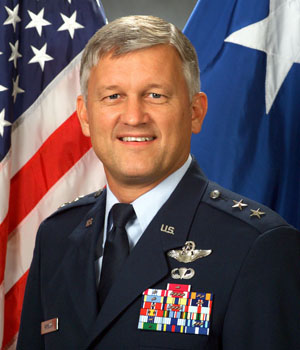 Bentley B. Rayburn (born June 15, 1953) is a retired United States Air Force major general, fighter pilot, and advocate for traditional military values.[1][2]
Rayburn graduated from the United States Air Force Academy in 1975 and flew combat missions as a fighter pilot, later rising to command positions including the Air Force Doctrine Center at Maxwell Air Force Base, Alabama, where he reported directly to the Air Force Chief of Staff.[3][2] Rayburn retired from the Air Force in 2006 after a career marked by leadership in doctrine development and fighter aviation.[2]
Post-retirement, Rayburn has pursued business interests in Colorado Springs and engaged in public advocacy, notably as chairman of the board for STARRS (Stand Together Against Racism and Radicalism in the Services), an organization dedicated to countering what it describes as divisive ideological influences, including critical race theory and diversity, equity, and inclusion initiatives, in the U.S. military.[4][5] He has critiqued these trends for undermining meritocracy and unit cohesion based on his frontline experience.[5]
Politically, Rayburn ran as a Republican for Colorado’s 5th congressional district in multiple primaries, including 2008 and 2014, advocating for fiscal conservatism and military readiness but without securing the nomination.[6][7][8]
Early life and education
Childhood and family background
Bentley Rayburn was born on June 15, 1953, in Pasadena, California.[1] Publicly available records provide limited details on his upbringing or parental background prior to his admission to the United States Air Force Academy.
United States Air Force Academy attendance
Bentley B. Rayburn attended the United States Air Force Academy (USAFA) in Colorado Springs, Colorado, as a member of the Class of 1975. He graduated on June 4, 1975, earning a Bachelor of Science degree in mathematics and basic sciences.[3][2][9]The USAFA curriculum during Rayburn’s tenure emphasized rigorous academic, military, and physical training to develop cadets into commissioned officers capable of leading in aerial warfare and national defense roles. Upon graduation, Rayburn was commissioned as a second lieutenant in the U.S. Air Force, marking the start of his 31-year military service.[3] No specific academic honors or class rankings for Rayburn from this period are documented in official records.
Military career
Fighter pilot assignments and combat experience
Rayburn completed undergraduate pilot training at Williams Air Force Base, Arizona, in 1976, followed by F-4 Phantom II qualification at George Air Force Base, California.[3] From 1977 to 1980, he served as an F-4 fighter pilot and instructor pilot with the 613th Tactical Fighter Squadron at Torrejon Air Base, Spain.[3]
Transitioning to the F-16 Fighting Falcon, Rayburn flew as a pilot and instructor with the 16th Tactical Fighter Squadron at Hill Air Force Base, Utah, from 1982 to 1983.[3] He graduated from the U.S. Air Force Fighter Weapons School at Nellis Air Force Base, Nevada, in 1983, after which he served as a weapons and tactics officer with the 4th Tactical Fighter Squadron and the 388th Tactical Fighter Wing at Hill AFB from 1983 to 1985.[3]
In 1987, Rayburn returned to instructor duties with the 435th Tactical Fighter Squadron at Holloman Air Force Base, New Mexico, and commanded the 434th Tactical Fighter Training Squadron there until 1990, accumulating over 3,000 flight hours across the T-37, T-38, AT-38, F-4, and F-16 aircraft.[3]
His combat experience began in 1993 as commander of the 4404th Operations Group at Dhahran Air Base, Saudi Arabia, where he led F-16C combat missions over southern Iraq to enforce United Nations sanctions against the Saddam Hussein regime.[3] From 1997 to 1998, he commanded the 4404th Wing (Provisional) at Prince Sultan Air Base, Saudi Arabia—the Air Force’s largest combat wing at the time—overseeing operations with F-16CG, F-16CJ, F-15C, F-15E, and supporting assets to maintain the no-fly zone over southern Iraq.[3
]During Operation Allied Force in 1999, Rayburn served as a senior battle staff director for Joint Task Force-Noble Anvil, directing joint air operations over Serbia and Kosovo from the Combined Air Operations Center.[3] His combat flying earned him the Air Medal with two oak leaf clusters, recognizing meritorious achievement in aerial flight under combat conditions.[3] These assignments underscored Rayburn’s expertise in fighter tactics and enforcement missions, though his later combat roles shifted toward command and staff oversight rather than direct piloting.[3]
Key command positions
Rayburn commanded the 434th Tactical Fighter Training Squadron at Holloman Air Force Base, New Mexico, from August 1987 to August 1990, overseeing F-16 training operations.[3] Later, as a colonel, he served as Commandant of the U.S. Air Force Weapons School at Nellis Air Force Base, Nevada, from August 1992 to April 1995, during which he also led the 4404th Operations Group in Dhahran, Saudi Arabia, directing F-16C missions enforcing United Nations sanctions over southern Iraq in 1993.[3]
In April 1995, Rayburn assumed command of the 388th Fighter Wing at Hill Air Force Base, Utah, leading the unit until June 1997 and managing F-16 operations amid post-Cold War force reductions.[3] He then deployed to command the 4404th Wing (Provisional) at Prince Sultan Air Base, Saudi Arabia, from June 1997 to July 1998, overseeing the Air Force’s largest combat wing at the time, which integrated F-16CG, F-16CJ, F-15C, F-15E, E-3, E-8C, and RC-135V/W aircraft to enforce the no-fly zone over southern Iraq under Operation Southern Watch.[3]
Promoted to brigadier general, Rayburn served as Commandant of the Air War College and Vice Commander of Air University at Maxwell Air Force Base, Alabama, from August 2001 to July 2004, shaping senior officer education and doctrine amid post-9/11 transformations.[3]
His final command was as a major general leading the Air Force Doctrine Center at Maxwell Air Force Base from July 2004, responsible for developing and publishing Air Force doctrine under the Chief of Staff’s direct oversight.[3]
Doctrine development and senior leadership roles
Rayburn advanced Air Force doctrine through senior command positions emphasizing research, development, and dissemination.
From July 2004, as Commander of the Air Force Doctrine Center at Maxwell Air Force Base, Alabama, he reported directly to the Chief of Staff of the Air Force, overseeing the creation and deployment of basic and operational doctrine, alongside joint, multiservice, and multinational publications; the center maintained operating locations at the Pentagon, Langley AFB, Virginia, Nellis AFB, Nevada, and U.S. Army facilities.[3]
In this role, Rayburn contributed to key doctrinal outputs, including authoring the foreword to Air Force Doctrine Document 2-1.6, Personnel Recovery Operations, which outlined principles for organizing and employing air and space power in recovery missions.[10] His leadership ensured doctrine aligned with operational needs, building on centralized control and decentralized execution tenets evident in related publications like airspace control guidance.[11]
Prior senior roles bolstered his doctrinal expertise, including service as Chief of the Doctrine Division in the Combined Republic of Korea/U.S. Air Component Command Staff at Osan Air Base from July 1986 to July 1987, where he shaped joint doctrine applications.[3] From August 2001 to July 2004, as Commandant of the Air War College and Vice Commander of Air University, he directed senior leader education programs that influenced doctrinal evolution through strategic analysis and force development.[3]
Rayburn’s broader senior leadership within Air Combat Command included positions as Inspector General (July 1998–January 2000) and Director of Plans and Programs (January 2000–August 2001), where he integrated doctrinal principles into operational planning and oversight at Langley AFB, Virginia.[3] These experiences culminated in his doctrine command, prioritizing empirical alignment with combat realities over abstract theorizing.
Retirement from the Air Force
Rayburn retired from active duty in the United States Air Force on April 1, 2006, after more than 30 years of service, culminating in his tenure as a Major General.[3][12] His final assignment was as Commander of the Air Force Doctrine Center at Maxwell Air Force Base, Alabama, where he oversaw the development and publication of Air Force doctrine, reporting directly to the Chief of Staff of the Air Force.[3]
At the time of retirement, Rayburn had amassed extensive experience in fighter operations, command roles, and doctrinal innovation, having been promoted to Major General on September 1, 2000.[13] No public controversies or unusual circumstances surrounded his departure, which aligned with standard career progression for senior officers after achieving two-star rank and key leadership positions.[12]
Political involvement
2014 congressional campaign
In 2014, retired U.S. Air Force Major General Bentley Rayburn launched a Republican primary challenge against incumbent U.S. Representative Doug Lamborn in Colorado’s 5th congressional district, marking his third attempt against Lamborn following unsuccessful runs in 2006 and 2008.[14][15][16]
Rayburn, leveraging his extensive military background including command roles in fighter squadrons and air operations centers, positioned his campaign around applying proven leadership to address congressional inefficacy, particularly in national security and fiscal matters.[17] The district, encompassing conservative strongholds like Colorado Springs and eastern plains counties, featured a contest where Rayburn criticized Lamborn’s tenure amid voter dissatisfaction with the incumbent’s voting record on defense issues.[18]
Rayburn’s campaign involved grassroots efforts such as local meet-and-greets and debates with Lamborn, emphasizing his combat experience in Operations Desert Storm and Southern Watch to contrast with Lamborn’s perceived establishment ties.[19] Fundraising showed Rayburn raising approximately $84,000 in the pre-primary period, with $33,000 cash on hand, though Lamborn maintained a stronger financial position with over $200,000 available.[20]
Supporters highlighted Rayburn’s platform of conservative principles, including opposition to new taxes and advocacy for military readiness, as articulated in local endorsements and voter letters praising his non-political outsider perspective.[21]The Republican primary election occurred on June 24, 2014, resulting in a close contest where Lamborn prevailed with roughly 53% of the vote to Rayburn’s 47%, securing 34,967 votes for Rayburn in a race not called until late evening due to tight margins in key counties like El Paso and Fremont.[18][16][14] Lamborn advanced to the general election, defeating Democratic nominee Irv Halter, while Rayburn’s campaign underscored intraparty divisions over leadership and policy execution in the district.
Post-retirement activities
Business and consulting roles
Following his retirement from the United States Air Force on April 1, 2006, Rayburn took on executive leadership in higher education, serving as president of the Colorado Springs campus of Colorado Technical University, a for-profit institution specializing in technical, business, and professional degree programs. He assumed the role in early December 2010, leveraging his military background to emphasize leadership development and veteran support in the university’s operations, which enrolled approximately 2,000 students at the time across online and ground-based programs.[6]
During his tenure, Rayburn focused on expanding enrollment and enhancing program relevance for working adults and military personnel, drawing on his experience as a senior Air Force officer to integrate practical leadership training. He departed the position in 2012 after approximately two years.[6]
Rayburn also held a corporate officer role as secretary of STATTUS Technology, Inc., a Florida-based company involved in technology and construction-related products, though the firm filed for Chapter 7 bankruptcy in 2020 with debts exceeding $350,000, listing Rayburn as its largest creditor for an unsecured claim.[22][23] No public records indicate ongoing consulting engagements in defense or military sectors post-retirement, with his professional activities primarily centered on educational and nonprofit leadership. He served as Board Chairman for Colorado Springs Charter School.[5]
Leadership in military advocacy organizations
In November 2025, Rayburn was elected Chairman of the Board of Directors for STARRS (Stand Together Against Racism and Radicalism in the Services), a 501(c)(3) nonprofit organization dedicated to preserving a merit-based, apolitical U.S. military focused on warfighting readiness.[5]
STARRS advocates for equal opportunity through high standards, ethical leadership, and selfless service, while opposing Diversity, Equity, and Inclusion (DEI) policies perceived as introducing ideological agendas that undermine unit cohesion and operational effectiveness.[5]
Under Rayburn’s prior involvement as a member of STARRS’s Board of Advisors, the group has emphasized educating the public and policymakers on threats to military meritocracy, including radical social engineering initiatives within the Department of Defense.[4]
Rayburn’s selection for the chairmanship leverages his extensive military leadership experience, including command of the Air Force Doctrine Center and roles in combat operations over Iraq and the Balkans, positioning him to guide STARRS’s efforts in promoting doctrinal and cultural reforms.[3] [4]
He has also chaired the E Pluribus Unum affinity group within the U.S. Air Force Academy Association of Graduates, an initiative aligned with STARRS’s goals of fostering unity and opposing divisive radicalism in service academies and the armed forces.[5]
Through these roles, Rayburn has contributed to public discourse on maintaining religious freedoms and traditional values in the military, critiquing external pressures that he argues erode core service principles, though such positions have drawn opposition from groups like the Military Religious Freedom Foundation.[24]
Views and advocacy
Stance on religious freedom in the military
Rayburn has consistently advocated for expansive religious freedoms for U.S. military personnel, asserting that service members, including cadets, retain full constitutional protections under the First Amendment’s free exercise clause, even in uniform.
In an April 20, 2014, opinion piece published in the Colorado Springs Gazette, he defended Air Force Academy cadets’ rights to publicly express their faith, stating that “government cannot restrict your free exercise of religion” and criticizing perceived overreactions to voluntary religious activities like Bible verse signings.[24] This position aligned with his broader view that military leaders should prioritize accommodating personal religious practices unless they directly undermine unit cohesion or mission readiness.
During his 2014 Republican primary challenge against incumbent U.S. Rep. Doug Lamborn, Rayburn accused Lamborn of insufficient action in defending religious liberties at the Air Force Academy, particularly amid investigations into evangelical expressions among cadets and staff.[25] He emphasized the role of endorsed chaplains in supporting troops’ spiritual needs and argued for safeguarding free speech and religion to maintain morale, drawing on his 31 years of Air Force service where he observed faith as a motivator for resilience in combat environments.
Rayburn’s advocacy extends to post-retirement efforts, where he has endorsed policies ensuring religious accommodations do not face undue bureaucratic hurdles, as evidenced by his involvement in military reform statements prioritizing constitutional rights over restrictive interpretations of secularism. Critics, including the Military Religious Freedom Foundation, have countered that such stances risk permitting coercive proselytizing in hierarchical settings, but Rayburn maintains that empirical evidence from operational contexts shows voluntary faith expressions enhance rather than erode discipline.[26]
Opposition to DEI and wokeness initiatives
Major General Bentley Rayburn has voiced opposition to Diversity, Equity, and Inclusion (DEI) initiatives and related “woke” policies in the U.S. military, primarily through his leadership in STARRS (Stand Together Against Racism and Radicalism in the Services), a nonprofit organization of military veterans and citizens dedicated to countering such programs.
Appointed Chairman of STARRS’s Board of Directors in November 2023, Rayburn endorses the group’s core mission to expose, oppose, and eliminate DEI and Critical Race Theory (CRT)—which STARRS describes as a divisive, Marxist-derived ideology—from Department of Defense (DoD) training and policies, asserting that these elements threaten merit-based selection, unit cohesion, and overall military readiness.[27][5][28]
Under Rayburn’s chairmanship, STARRS argues that DEI frameworks, by emphasizing “equity” as equal outcomes via racial or gender quotas rather than equal opportunity, lower performance standards and foster resentment among service members, thereby eroding the teamwork and selfless service vital to warfighting effectiveness.
The organization, founded in 2020 amid concerns over CRT-influenced content at the U.S. Air Force Academy, has pursued this stance through Freedom of Information Act requests, lawsuits for transparency on alleged systemic racism claims (such as those at USAFA), and public education campaigns highlighting how “woke” agendas prioritize identity politics over apolitical, high-standards professionalism.[27][29]
Rayburn’s advocacy extends to broader efforts, including his service on the USAFA Association of Graduates’ E Pluribus Unum affinity group, which promotes unity against division, and endorsements of candidates like Kendall Qualls in 2024, who pledged to eradicate DEI indoctrination in the armed forces to restore focus on mission accomplishment.
STARRS, with Rayburn at the helm, maintains that empirical evidence of declining recruitment and morale—linked by the group to these policies—necessitates their full removal to preserve a military grounded in ethical character and meritocracy.[5][30][27]
Controversies and criticisms
Debates over cadet religious rights
In April 2014, during his Republican primary campaign for Colorado’s 5th congressional district, retired Maj. Gen. Bentley Rayburn publicly criticized incumbent Rep. Doug Lamborn for insufficiently defending religious freedoms at the U.S. Air Force Academy, arguing that recent policies and sensitivities had curtailed cadets’ rights to express their faith.[25]
In an op-ed published in the Colorado Springs Gazette on April 20, 2014, Rayburn asserted that “government cannot restrict your free exercise of religion,” positioning unrestricted cadet expression—such as displaying Bible verses or participating in voluntary faith-based groups—as a constitutional imperative protected under the First Amendment and the Religious Freedom Restoration Act (RFRA) of 1993.[24]
Rayburn’s stance echoed broader conservative advocacy against perceived Obama-era restrictions on military religious expression, including 2013 Air Force guidance limiting public proselytizing and Academy-specific responses to complaints of evangelical dominance, which he viewed as yielding to secular pressures that undermined morale and recruitment.[26] He contended that such limits violated cadets’ rights as service members, drawing on his 31-year Air Force career and service academy experience to argue for leadership that prioritizes faith as a strength rather than a liability.[25]
Opponents, led by Mikey Weinstein of the Military Religious Freedom Foundation (MRFF), rebutted Rayburn’s position as legally and practically erroneous, emphasizing that cadets, as uniformed personnel in a hierarchical training environment, do not enjoy unrestricted free exercise to avoid coercion, command influence, or Establishment Clause violations.[26][24] Weinstein, whose organization had filed complaints and lawsuits against the Academy for alleged Christian proselytizing since 2004, argued in responses published April 26–27, 2014, that military service inherently limits rights for unit cohesion and mission focus, citing precedents like the Uniform Code of Military Justice and Department of Defense instructions (e.g., DoDI 1300.17 on religious liberty, updated in 2013 but contested for balance).[26]
The exchange highlighted tensions between religious liberty advocates, who saw MRFF-driven reforms as anti-Christian bias suppressing majority-faith expression, and civil liberties groups wary of dominance in taxpayer-funded institutions; Rayburn’s campaign rhetoric amplified these divides but did not alter primary outcomes, with Lamborn prevailing in June 2014.[25] Subsequent military policies under later administrations, such as 2018 DoD expansions of religious accommodations, partially aligned with Rayburn’s emphasis on protections but maintained limits on overt displays in training contexts.[26]
Political primary challenges and intraparty critiques
Rayburn mounted primary challenges against incumbent Republican U.S. Representative Doug Lamborn in Colorado’s 5th congressional district during the 2008 and 2014 election cycles.[15][31] In the 2008 Republican primary, Rayburn competed alongside businessman Jeff Crank, securing approximately 22.7% of the vote while Lamborn advanced with 44.9%.[32]The 2014 primary represented a rematch, marked by intense intraparty rivalry, with Rayburn positioning himself as a stronger leader drawing on his military experience.[15] Lamborn prevailed in a narrowly contested race, winning by roughly 1 percentage point after votes were tallied late into the evening.[18]
Throughout these campaigns, Rayburn leveled intraparty critiques at Lamborn, particularly accusing him of inadequate defense of religious freedoms and free speech for cadets at the U.S. Air Force Academy, an institution within the district.[25] Rayburn argued that Lamborn had not sufficiently advocated against perceived restrictions on evangelical expressions, reflecting broader tensions within the Republican base over military cultural issues.[25] These challenges highlighted divisions among Colorado Republicans between established incumbents and military veterans emphasizing leadership and conservative priorities on national security and religious liberty.
Personal life and legacy
Family and residences
Rayburn is married to Debra Rayburn. The couple resides in Colorado Springs, Colorado. Public records associate additional addresses in the area with Rayburn, reflecting his long-term ties to the region following retirement from the U.S. Air Force.[33]
Awards, honors, and lasting impact
Rayburn received numerous military decorations during his Air Force career, including the Legion of Merit with one oak leaf cluster, the Defense Meritorious Service Medal with one oak leaf cluster, the Meritorious Service Medal with four oak leaf clusters, the Air Medal with two oak leaf clusters, the Aerial Achievement Medal with one oak leaf cluster, and the Air Force Commendation Medal.[3] These awards recognized his leadership in operational commands, such as directing F-16C missions enforcing United Nations sanctions over southern Iraq in 1993 and commanding the largest combat wing in the Air Force during no-fly zone enforcement from 1997 to 1998.[3]
In 1990, Rayburn was named one of the Ten Outstanding Young Americans by the United States Junior Chamber (Jaycees) for his military service and leadership as a lieutenant colonel.[34]Rayburn’s lasting impact includes shaping Air Force doctrine as Commander of the Air Force Doctrine Center from 2005, overseeing the development of joint, multiservice, and multinational operational guidelines, and his roles as Commandant of the U.S. Air Force Weapons School and Air War College, which influenced pilot training and senior officer education.[3]
Post-retirement in 2006, he has advocated for merit-based military policies through leadership in organizations like STARRS, where he serves as Chairman of the Board of Directors, promoting competence-focused education and opposing diversity, equity, and inclusion initiatives perceived as undermining readiness.[5] His efforts extend to educational institutions, including serving as President of Colorado Technical University and Chairman of the Board for Colorado Springs Charter School, contributing to leadership development outside the military.[5]


Leave a Comment