
By Lt. Col. Darin Gaub, US Army ret
In the early twentieth century, airplanes transformed warfare. In the twenty-first century, drones are doing the same.
My study, “Children of Aphrodite: The Proliferation and Threat of Unmanned Aerial Vehicles in the Twenty-First Century,” published in 2011, argued that drones represent a technological shift comparable to the emergence of airpower during World War I. The proliferation of these systems, once limited to major military powers, is now spreading to states and non-state actors alike.
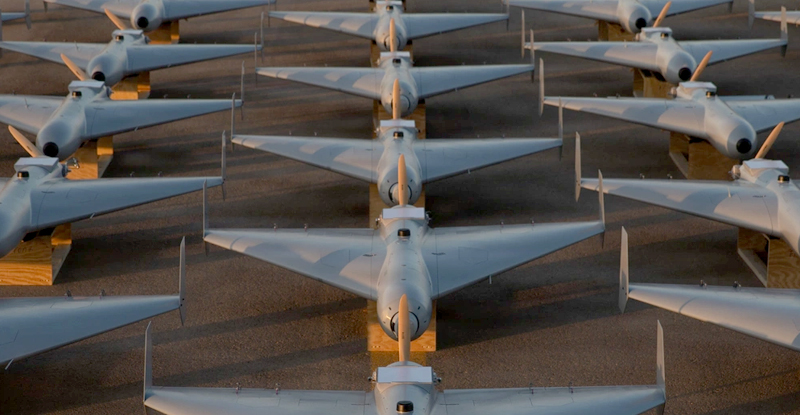
Few modern operations demonstrate this transformation more clearly than Operation Epic Fury and the Russia/Ukraine war. Both conflicts rely on conventional air support, but they also illustrate how drones have become indispensable to modern combat—providing persistent surveillance, target identification, and precision-strike capability that have reshaped tactical, operational, and strategic decision-making.
Early drones, such as America’s Pioneer and Predator systems, were designed primarily to observe the battlefield and relay intelligence to commanders. Over time, however, their role expanded dramatically. Drones evolved into platforms capable of laser designation, communications relays, lethal strike missions, and air-to-air combat.
This evolution mirrors the trajectory of early aviation. During World War I, aircraft began as reconnaissance tools but quickly expanded into bombing, strafing, and air-to-air combat once commanders realized their potential. The same pattern occurred with drones: a technology initially used to observe the battlefield became a decisive combat instrument.
In 2026, Operation Epic Fury represents not simply a continuation of drone warfare but its maturation. Persistent surveillance, AI-assisted targeting, and drone swarms now form the backbone of battlefield awareness and tactical maneuver.
The implications go far beyond Ukraine and Iran. My research began in 2007, when I started training U.S. forces to use drones. Now, over the last twenty years, the warnings I provided the Department of Defense and Department of Homeland Security have become a reality.
The same technological advantages initially enjoyed by the United States inevitably spread to adversaries and made drones a threat to deployed U.S. forces and the American homeland. Many countries now operate drone programs, and numerous non-state actors experiment with similar systems.
This proliferation presents a growing strategic challenge. Just as early airpower eventually reshaped warfare across the globe, drone technology is rapidly becoming accessible to actors with far fewer resources than traditional military powers. Drones are inexpensive and are often as lethal as more expensive systems.
When Hamas invaded Israel, multi-million-dollar Merkava tanks were destroyed by overhead drones costing tens of thousands at the most. One strategic challenge facing industrial nations like the United States is one of cost. How much longer can we invest billions in piloted platforms when we could invest millions instead?
A large part of the investment in aircraft is in the systems necessary to keep pilots operational. Drones remove not only the need for oxygen systems, but g force suits, ejection seats, and much more. They also greatly reduce the need for multi-layered down pilot recovery plans that require a variety of expensive systems and specially trained personnel.
The lesson is clear: unmanned systems are no longer experimental tools or niche capabilities. They are the modern battlefield’s equivalent of the airplane in 1914—an innovation whose true strategic consequences are only beginning to emerge, often limited only by the imagination of the user.
Today, the nations that adapt fastest to the reality of drones on land, at sea, and in the air will shape and win the wars of the future.
The consequences and opportunities I first warned about over twenty years ago are here.
_
Lieutenant Colonel (Retired) Darin Gaub is a Senior Strategic Analyst, Blackhawk Helicopter Pilot and Commander, and Author of VERITAS VINCIT. He spent over twenty years training military forces on drone use, counter-drone operations, and Combat Search and Rescue operations. He is a frequent guest on Fox News, NTD News, Newsmax, and Canadian TV News. He has been published in The Epoch Times, the Armed Forces Press, RealClearPolitics, and RealClear Defense.





Leave a Comment